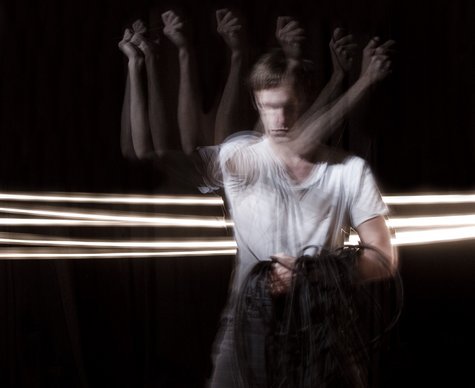
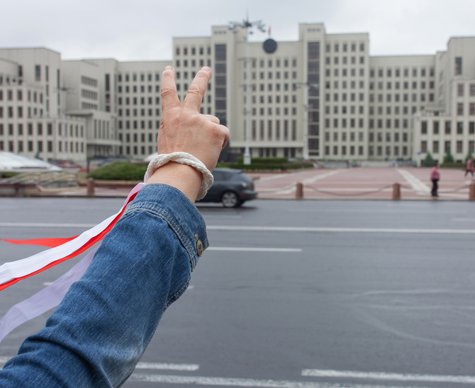
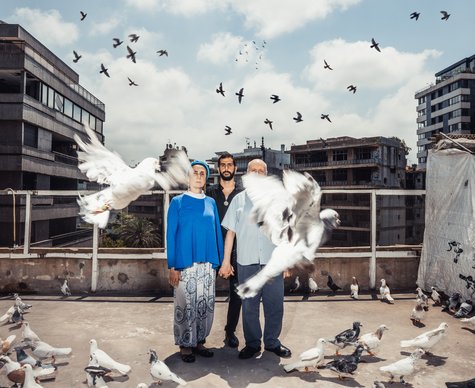
Concept, text, direction: Carolina Bianchi / With: Chico Lima, Flow Kountouriotis, José Artur, Kai Wido Meyer, Lucas Delfino, Rafael Limongelli, Rodrigo Andreolli, Tomás Decina, Carolina Bianchi / Dramaturgy, research partner: Carolina Mendonça / Dialogue on theory and dramaturgy: Silvia Bottiroli / Translation to English: Marina Matheus / Technical direction, sound design, original music: Miguel Caldas / Assistant direction: Murilo Basso / Set concept: Carolina Bianchi, Luisa Callegari / Art direction, costumes: Luisa Callegari / Light design: Jo Rios / Videos, screenings: Montserrat Fonseca Llach / Live Camera, artistic support: Larissa Ballarotti / Choreographic invocation (prologue), movement advisor: Jimena Pérez Salerno / Stage manager, production assistant: AnaCris Medina / Production direction, tour management, communication: Carla Estefan / International relations, production, diffusion: diffusion metro Gestão Cultural
Carolina Bianchi y Cara de Cavalo
The Cadela Força Trilogy: Chapter II – The Brotherhood
- Performance
- Theatre
Brazilian Portuguese /
with German and English surtitles /
225 mins. (incl. intermission)
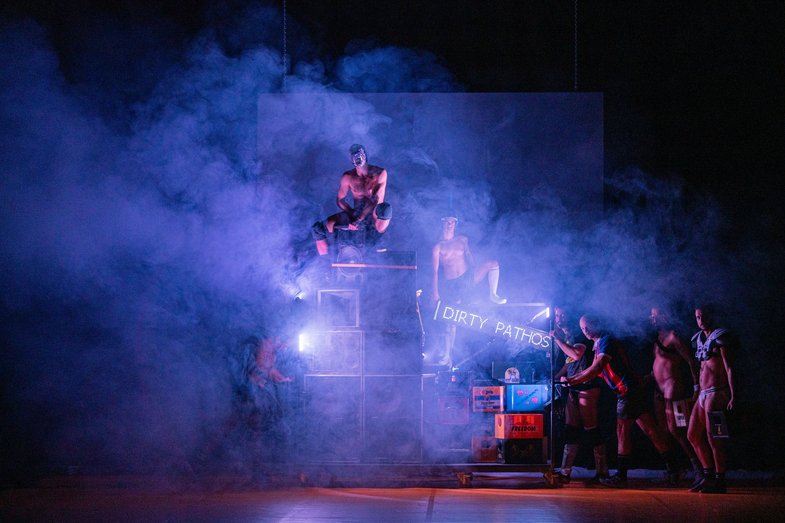
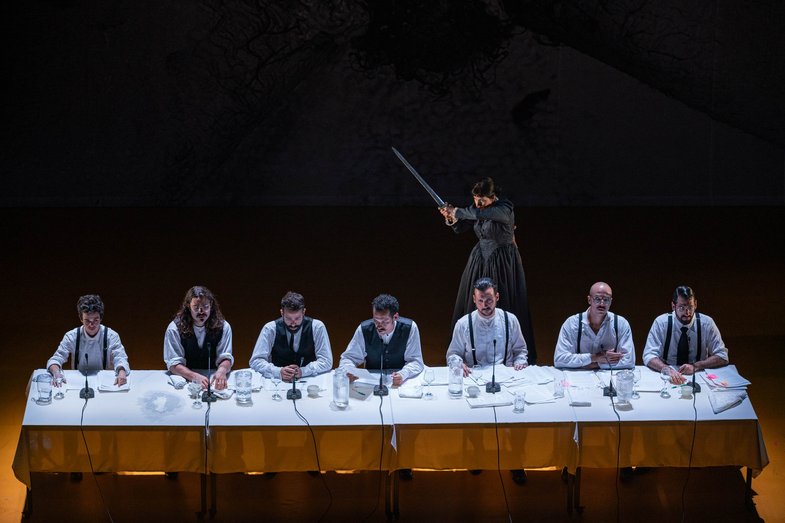
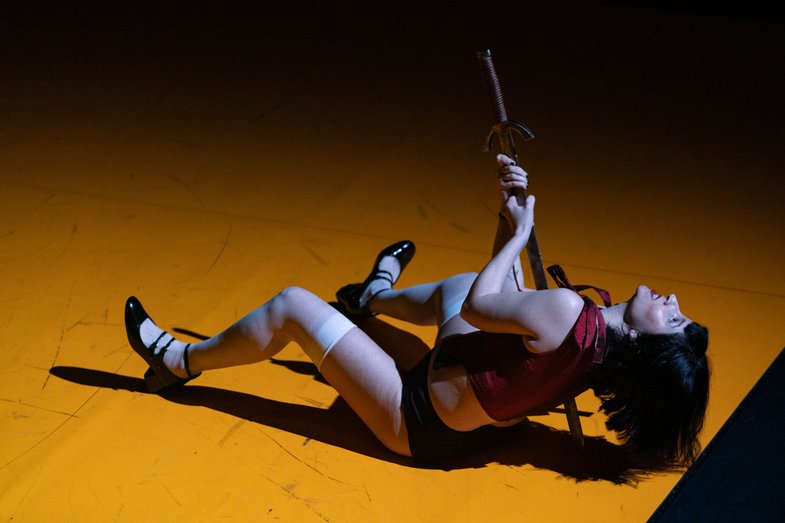
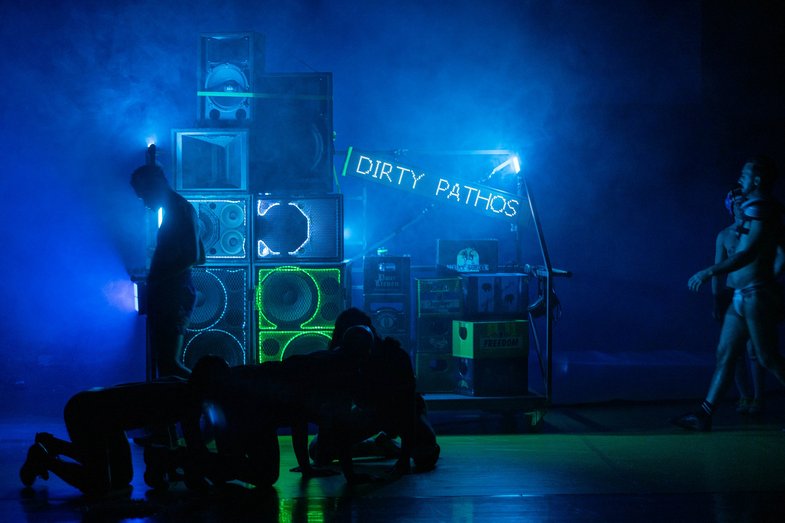
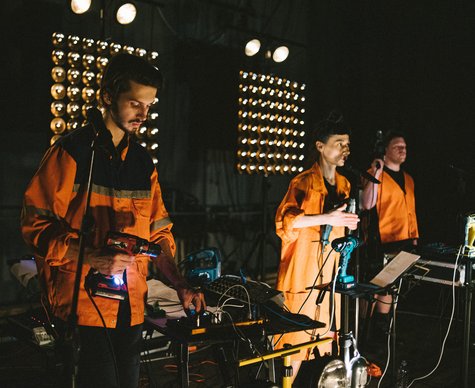
Brazilian theatre maker and this year's winner of the Silver Lion in Venice, Carolina Bianchi, returns to HAU after two years with part two of her sensational trilogy “Cadela Força”: “The Brotherhood” tackles male alliances, brotherhoods and their codes that are profoundly marked by misogyny and sexualized violence. A frame change!
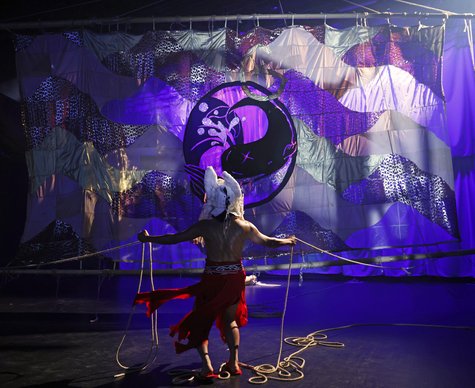
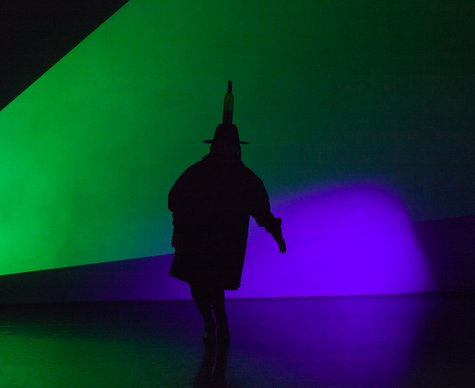
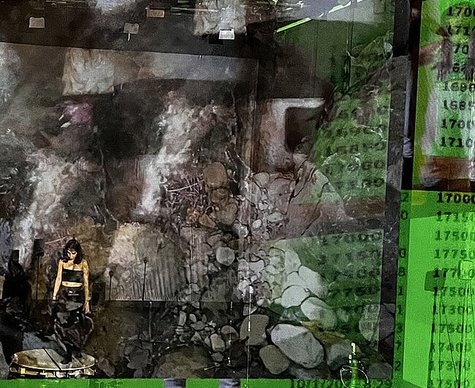
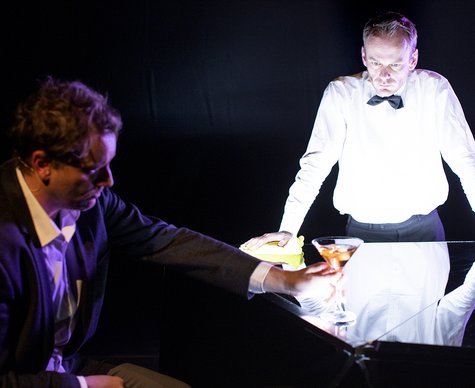
Carolina Bianchi is currently considered one of the most uncompromising voices on the international theatre scene. Following “The Bride and The Goodnight Cinderella”, the first part of “Cadela Força” (The Strength of the Slut), the Brazilian theatre maker now returns to HAU with the second part of her trilogy on sexualised violence against women: In “The Brotherhood,” she dismantles the ideal of brotherhood with an ensemble consisting exclusively of men – besides herself. Layer by layer, power dynamics are exposed, patriarchal myths are deconstructed and images of masculinity that are deeply marked by misogyny and sexual violence are questioned. In doing so, Bianchi turns her gaze to the origins of male power structures: the alliances, rituals and codes in which patriarchy and misogyny are often subtly inscribed. But this evening also highlights how male power dynamics inspire admiration with regard to art history. In the first act, Bianchi interviews a powerful and famous director. In the second act, a group of male actors takes over the stage and the work turns out to be a trap: while Bianchi exposes male power structures, she herself becomes a character who suffers the consequences of her view of this system. The first part of the “Cadela-Força” trilogy, “The Bride and Goodnight Cinderella,” caused a worldwide sensation. Part two once again makes us reflect on the role of violence in our society and how we contribute to perpetuate it, whether we are aware of it or not.
Since 2015, Carolina Bianchi, who received the Silver Lion at this summer's Biennale di Danza in Venice, has been working with her collective Cara de Cavalo (Horse Face) from São Paulo on her very own theatrical language, which moves between confrontation, provocation, social analysis and political relevance. The interdisciplinary group weaves research, theory, pop culture and art history into hybrid performances. In doing so, the stage becomes a venue for urgent issues such as femicide, gender-based violence and patriarchal structures.
Press reviews:
“A scathing, unsettling and important show about masculinity in the arts and in the theatre, without sparing ourselves either. Beware, it burns.” Sceneweb
“An astonishing second part”. Libération
“A theatrical uppercut of rare acuity. Brilliant.” L'Œil de l'Olivier
“The Brotherhood is an awakening after sleep, a time to look our idols and criminals in the face and come to terms with them, without pathos, without catharsis and always without forgiveness.” cult.news
"We have never heard someone talk so overwhelmingly about sexual violence against women in theatre before." Filip Tielen on “The Bride and The Goodnight Cinderella” in De Standaard
Team
By viewing the video you agree that your data will be transmitted to and that you have read the privacy policy .
Dates
Past
This performance includes passages with loud music; ear protection is available free of charge at the cloakrooms. Strobe lighting and fog are used.
This performance deals with topics such as physical violence, rape, and suicide. It contains depictions of sexual violence. Recommended for audiences aged 16 and over.
Credits
Production: Metro Gestão Cultural, Carolina Bianchi y Cara de Cavalo. Co-production: HAU Hebbel am Ufer, KVS Brussels, Theater Utrecht, La Villette, Festival d’Automne à Paris, Comédie de Genève, International Summer Festival Kampnagel, Les Célestins Théâtre de Lyon, Kunstenfestivaldesarts, Wiener Festwochen, Holland Festival, Frascati Producties, Maillon, Théâtre de Strasbourg – Scène Européenne. Supported by: Tax shelter of the Belgian Federal Government by Cronos Invest, Ammodo Foundation. Funded by the Federal Government Commissioner for Culture and the Media as part of the Alliance of International Production Houses.

Location
HAU1
Stresemannstr. 29, 10963 BerlinThere are two marked parking spots in front of the building. Access to the Parkett by means of a separate entrance with lift when necessary. Barrier-free restroom facilities are available.