EXPOSING CRIMES IS NOT A CRIME
Day 3
17:00 Global Economy & Corporate Secrets
With Matthew Kennard, Scott Ludlam, Esteban Servat, Clara López Rubio / Moderation: Deepa Govindarajan Driver
20:00 Art as Evidence & Resistance
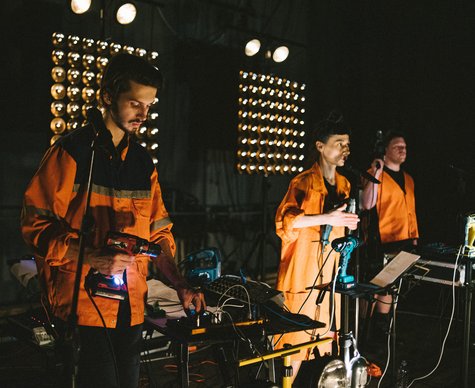
Mit Robert Trafford, Institute for Dissent and Datalove, Davide Dormino, Manja McCade / Moderation: Becky Haghpanah-Shirwan
Live stream on HAU4
- Dialogue
English /
With German simultaneous translation /
Global Economy & Corporate Secrets
17:00–19:00
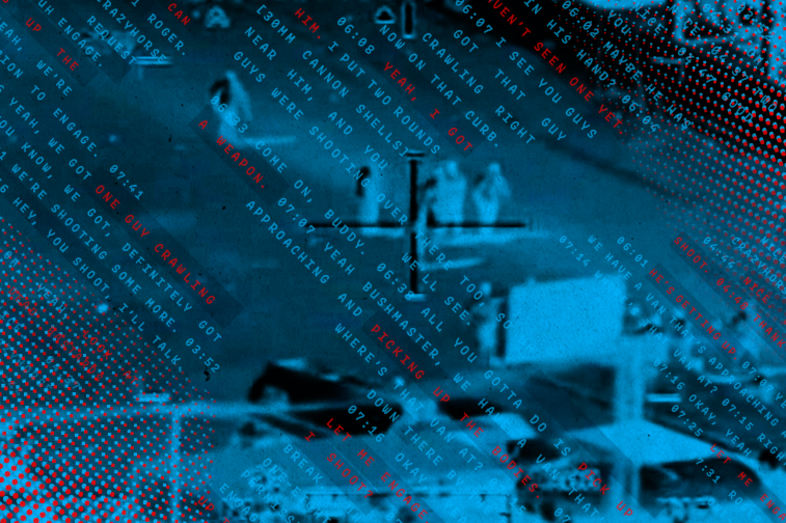
With Matthew Kennard (Author, Investigative Journalist, UK), Scott Ludlam (Designer, Researcher, Former Senator for Western Australia, AU), Esteban Servat (Climate Activist, Founder, EcoLeaks AR/DE), Clara López Rubio (Filmmaker, ES/DE)
Moderation: Deepa Govindarajan Driver (Lecturer in Governance, Regulation and Risk, Henley Business School, UK)
In the globalised economy, international trade deals have been criticised for decades for making legislation behind closed doors with access and influence given to corporate lobbies and multinational corporations, without insight from democratic institutions or civic society. Democratic representatives and NGOs have come to depend on publishers like WikiLeaks to be able to counter moves to privatise public goods, censor the Internet, patent extensions making life saving drugs inaccessible, undermining environmental and labor regulations and much more.
One of WikiLeaks’ first important publications exposed information about alleged tax fraud and money laundering facilitated by Bank Julius Bär via the Cayman Islands – disclosures for which the website was temporarily shut down, with the injunction eventually lifted on civil rights grounds. The powers of corporations are also exposed in cases like the Fishrot Files, where a whistleblower revealed how western multinationals bribed Namibian authorities and companies to gain control of fishing quotas and avoided paying taxes by using tax havens.
However, WikiLeaks went beyond releasing documents in their demands for corporate accountability: In 2015, WikiLeaks launched a crowdfunding campaign to raise 100 000 Euro to motivate whistleblowers to come forward and speak about “Europe’s most wanted secret” at the time – details regarding the planned Transatlantic Trade and Investment Partnership (TTIP).
This conference section will explore WikiLeaks’ impact in unmasking corporate and political misconduct: Matthew Kennard, co-founder of Declassified UK, has worked extensively on the WikiLeaks disclosures to examine Western foreign policy, specifically British and American military and intelligence operations, and today is investigating the UK’s role in intelligence and logistics support during the war in Gaza.
As a former Australian politician and member of the Australian Greens, Scott Ludlam has spent nearly two decades working to phase out uranium mining at the Jabiluka mine and in Western Australia. He has actively opposed the deployment of nuclear weapons and fought for Aboriginal land rights, peace and disarmament. He has also campaigned against real-time mass surveillance of users and for the fair treatment of Julian Assange and WikiLeaks.
Esteban Servat, a scientist from Argentina and the founder of EcoLeaks (a project inspired by WikiLeaks), published a secret government document revealing contamination of water tables by the first pilot wells of fracking in Mendoza province, part of the Vaca Muerta shale play. This led to building a massive anti-fracking movement and to intense government persecution and death threats that lead him to move.
In her film “Hacking Justice” (2017/2021), filmmakers Clara López Rubio and Juan Pancorbo document the period during which Julian Assange took refuge in the Ecuadorian embassy in London, following the work of his lawyer, Baltasar Garzón. A key focus of the film is the CIA-linked spying operation conducted by the Spanish security firm UC Global during Assange's asylum in the Embassy.
The panel is moderated by Deepa Govindarajan Driver, whose advocacy work has demonstrated the relevance of WikiLeaks' activities in terms of corporate responsibility and accountability.
Art as Evidence & Resistance
20:00–22:00
With Robert Trafford (Deputy Director, Forensis; Assistant Director, Forensic Architecture, UK/DE), Institute for Dissent and Datalove (Collective of Hackers, Artists, Activists and Tinkerers, DE, FR, US), Davide Dormino (Visual Artist, Activist, IT), Manja McCade (Artist, Co-Founder, Julian Assange Archive e.V., DE)
Moderation: Becky Haghpanah-Shirwan (Director, A/POLITICAL, UK)
The time frame from 2009 to 2016 was a crucial period of collective experiences towards the formulation of artistic practices in relation to whistleblowing. In this period, close networks of trust were established around this topic, rooted in WikiLeaks’ activities which pushed the boundaries of what is correct to publish, and what could count as art.
In November 2009, WikiLeaks published 570,000 confidential 9/11 pager messages, documenting over 24 hours in real time of the period surrounding the September 11, 2001 attacks in New York and Washington. The archive visible at 911.wikileaks.org showed US national text pager intercepts of official exchanges at the Pentagon, FBI, FEMA and New York Police Department, and from computers reporting faults at investment banks inside the World Trade Centre. WikiLeaks’ “9/11 tragedy pager intercepts” is rebroadcasted in real time on subsequent 9/11s.
The concept of “Art as Evidence” was inspired by an exchange between Oscar-winning filmmaker and journalist Laura Poitras, artist, researcher and investigative journalist Jacob Appelbaum, artist and geographer Trevor Paglen, and Tatiana Bazzichelli, former curator of the transmediale festival and artistic director of the Disruption Network Lab. It was introduced at the keynote event “Art as Evidence” at the transmediale festival in Berlin in 2014 to explore artistic practices that speak and inform about reality, as well as provoke a response to it.
In the past 10 years the debate over abuses of government and large corporations has reached a broad audience, encouraging reflection on new tactics and strategies of resistance. Whistleblowing, leaking, and disclosing have opened new terrains of struggle. What is the artistic and activist response to this process? How is it possible to transfer the surveillance and whistleblowing debate into a cultural and artistic framework, to reach and empower both experts and non-experts?
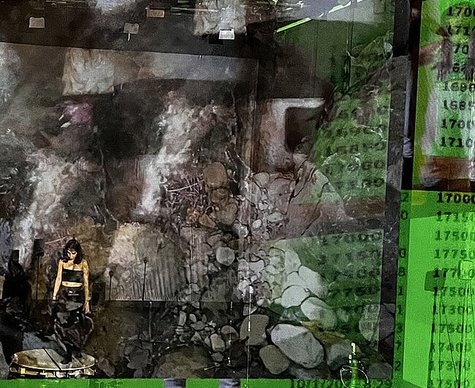
This conversation brings together different artistic and activist practices: socialised methods of producing visual evidence through the use of open-source intelligence tools at Forensis and Forensic Architecture, as discussed by Robert Trafford; the use of critical technology to generate de/re-contextualisation of large datasets, de-formatting formats, and the playful use of liberating algorithms with The Institute for Dissent and Datalove; distributed practices advocating the right to speak out, as done with the travelling sculptures portraying Julian Assange, Chelsea Manning, and Edward Snowden, created by visual artist Davide Dormino; a growing collective collection, The Julian Assange Archive, presented to a large public for the first time by Manja McCade, that preserves the story of Julian Assange and the worldwide movement for press freedom, transparency, and justice, including the many letters Assange received from supporters throughout his years of persecution.
The moderator is Becky Haghpanah-Shirwan, Director of A/POLITICAL, a London-based arts organisation that, in collaboration with the Wau Holland Foundation, organised the exhibition 'States of Violence' in 2023. This exhibition marked the fourth anniversary of Julian Assange's detention in the high-security Belmarsh Prison and featured works by some of the speakers on this panel.
In relation to the concept of art as evidence, and in light of new tactics of resistance, the final panel of the symposium discusses artistic practices and methodologies that counter power oppression, advocate for grassroots interventions, and protect civil rights and social justice.
Dates
Past
Day ticket: 15 € , reduced price 9 €
3-day ticket: 35 €, reduced price 21 €
Credits
A Symposium by Disruption Network Lab (disruptionlab.org). Funded by: Hauptstadtkulturfonds, The Reva and David Logan Foundation. In cooperation with the Wau Holland Foundation (wauland.de) and HAU Hebbel am Ufer.


Location
HAU1
Stresemannstr. 29, 10963 BerlinThere are two marked parking spots in front of the building. Access to the Parkett by means of a separate entrance with lift when necessary. Barrier-free restroom facilities are available.