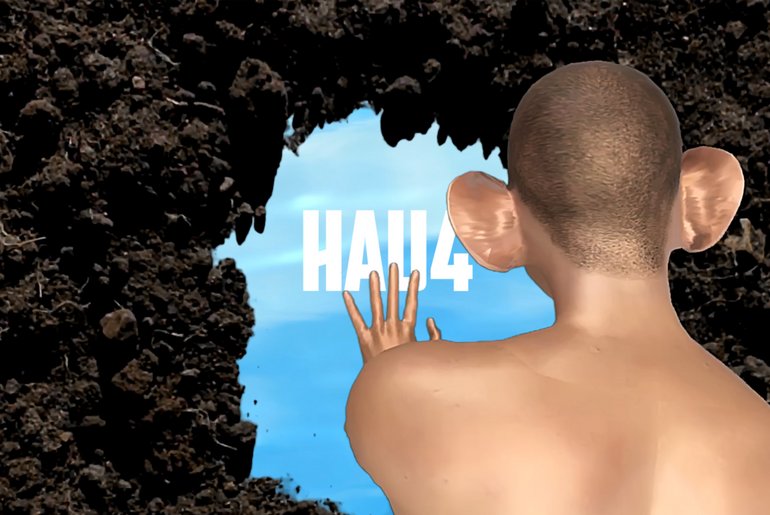
HAU / ARGEkultur Salzburg / Schauspielhaus Graz

WORLD WIDE WIKI

Afterwards available at the HAUthek.

    German /  English / 

    In 2026, Wikipedia will celebrate its 25th birthday. The encyclopaedia, which went online on 10 January 2001, not only represents the digital and democratic spirit of the 1990s – it also reflects the major and often problematic developments in the digital world over the past quarter of a century. Nevertheless, with around 65 million articles and hundreds of thousands of active, anonymous and volunteer authors, Wikipedia is now an indispensable archive of free knowledge on the World Wide Web.

    But this free knowledge is under acute threat. AI companies are training their large language models with Wikipedia’s open-source texts, thereby siphoning off knowledge for their proprietary products. At the same time, the culture war from the right is gathering momentum: its non-profit status is being called into question, funding is being withdrawn and the identities of authors are being revealed.

    Wikipedia is just one prominent example of the current state of free knowledge on the internet. Whether it’s digital archives, social media or government websites, information is disappearing and being censored – often disguised as criticism of supposed ‘wokeness’ and under the guise of free speech. Whether the internet really never forgets has ultimately become a question of power, capital interests and political influence.

    How can digital art deal with this situation and raise awareness of it? How can it even find ways to preserve endangered knowledge and keep it accessible?

    Together with the DIGITAL SPRING Festival at ARGEkultur Salzburg and the DIGITHALIA Festival at Schauspielhaus Graz, HAU Hebbel am Ufer launched an open call in autumn 2025 to develop digital art projects on this topic. As a result, the following six artists and collectives were selected:

    The artist duo eeefff and the artist Chinedum Muotto from Berlin; artist Nina Vasilchenko and a collaborative project by the collectives gold extra and Kronberger & Kronberger from Salzburg; works by the artist groups SOAP and Planetenpartyprinzip from Graz. All works will be shown at www.hau4.de.

    Part of the project is a mentoring for the artists by Wikimedia Germany.


    eeefff
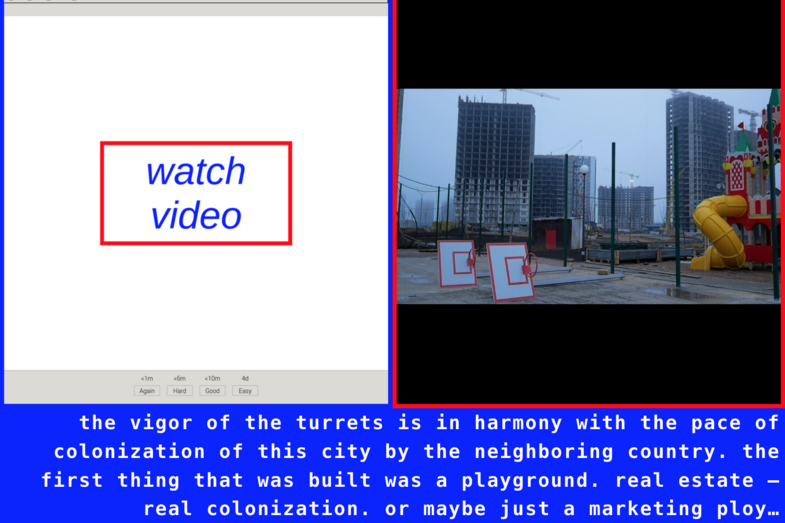
    Tactical Forgetting
    “Tactical Forgetting” is a web-based, participatory game and computer-assisted mental exercise that deals with digital memory, shared knowledge and strikes. Based on its own activist experience during the 2020 revolution in Belarus, the project examines how infrastructural systems of care can be helpful for cyber-partisan practices and resistance. Users navigate along different narrative paths, the direction of which they decide for themselves. The path they find provides insight into disappearing archives and veiled protocols, as well as internet blockades and digital battlefields. The work rethinks affective computer technology and algorithmic power structures and asks how oppressed communities can act in the midst of digital fascism and build new infrastructures of imagination.

    The duo eeefff (Minsk/Berlin) is an artistic collaboration, an invented institution, a cybernetic political brigade, a poetic calculation, a hacking unit, or queer time. Active since 2013, eeefff works with emotions and affects shaped by technologies, creating software-based projects, publications, networks, and platforms that critically engage with digital labour, value extraction, and community building. Methods include public actions, online interventions, performative seminars, software and hardware hacking, and the choreography of everyday social situations. Since 2022, the duo has been organising the School of Algorithmic Solidarity, which it founded to explore the relationships between infrastructural time, algorithmic abstractions, and bodies. Eeefff are co-organisers of “Work Hard! Play Hard!” (2016–2020), “Decentric Circles Assembly” (2024) and “Forest Assembly of Educational Fictions” (2025).

    Chinedum Muotto
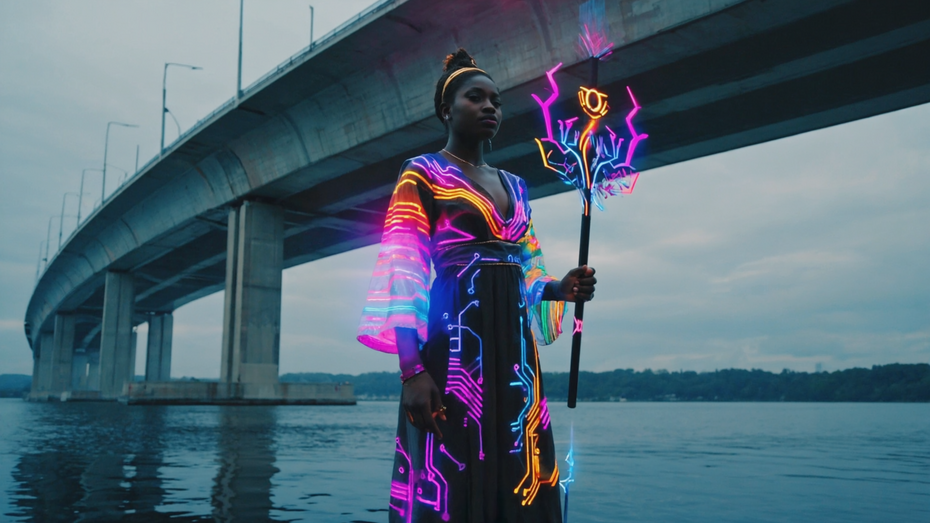
    The Sankofa Protocol
    What if the internet hadn’t forgotten its manners? What if it asked you to listen first before giving you an answer? “The Sankofa Protocol” is a speculative fork in the road of digital knowledge. We see how Wikipedia’s “free knowledge” is absorbed by AI, erasing context and authorship. However, this future is rejected here. The work is a different kind of tool. A digital offering. The protocol responds to a self-posed question from the present not with data, but with ancient wisdom. Oral traditions are recounted, along with their history, their spirit and the conditions of their transmission. The project is not a database. It is a relationship. It opens up a world in which technology is not an extractive force, but a basis for preservation, restitution and genuine listening. We go back, not to live in the past, but to build a different future.

    Chinedum Muotto is a Berlin-based Nigerian-Irish interdisciplinary artist and researcher working at the intersection of web-based art, decolonial archival practice, and emerging technologies. His practice combines writing, sound, participatory research and lightweight software to question how knowledge is stored, shared and owned online. In 2025 he was artist-in-residence at ZK/U (Zentrum für Kunst und Urbanistik), Berlin. Recent projects include “The Sankofa Protocol (Ancestral API)”, which proposes a non-extractive interface for engaging Indigenous knowledge through provenance, consent and orality. His work draws on African philosophies of memory, repair cultures and diasporic networks, and is developed between Berlin and multiple African cities. He builds public-facing digital commons that foreground custodianship, reciprocity and accountability.

    Dates

    Current
    Mon 23.3.2026, 17:00 / HAU4

    Credits

    A cooperation between HAU Hebbel am Ufer, ARGEkultur Salzburg, and Schauspiel Graz. Supported by: Wikimedia Deutschland.
    Location

    HAU4
    Digital Stage

    HAU’s digital stage

    HAU3000 / Positions, Projects, Publications

    The Glowing Room

    Text by Hendrik Otremba.
    An Introduction to “Collectivize Facebook”

    By Jonas Staal

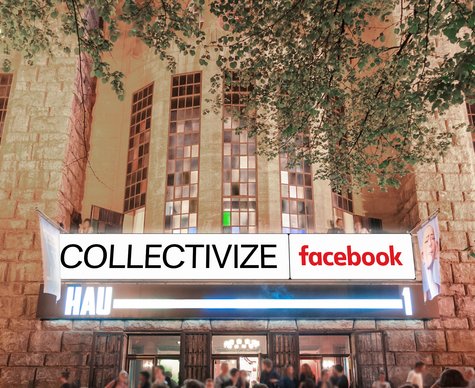
    “Collectivize Facebook” is a lawsuit aimed to turn Facebook into public property, initiated by artist Jonas Staal and lawyer Jan Fermon. Read here Staal’s introduction to the project.

    “Manifestos for Queer Futures”

    Video Documentation

    As part of the festival “The Present Is Not Enough – Performing Queer Histories and Futures”, HAU initiated an open call for artists based in Berlin, who were invited to submit proposals for their Manifestos for Queer Futures.