HAU’s digital stage
HAU / ARGEkultur Salzburg / Schauspielhaus Graz
WORLD WIDE WIKI
Afterwards available at the HAUthek.
- Digital Art
- Online
German /
English /
In 2026, Wikipedia will celebrate its 25th birthday. The encyclopaedia, which went online on 10 January 2001, not only represents the digital and democratic spirit of the 1990s – it also reflects the major and often problematic developments in the digital world over the past quarter of a century. Nevertheless, with around 65 million articles and hundreds of thousands of active, anonymous and volunteer authors, Wikipedia is now an indispensable archive of free knowledge on the World Wide Web.
But this free knowledge is under acute threat. AI companies are training their large language models with Wikipedia’s open-source texts, thereby siphoning off knowledge for their proprietary products. At the same time, the culture war from the right is gathering momentum: its non-profit status is being called into question, funding is being withdrawn and the identities of authors are being revealed.
Wikipedia is just one prominent example of the current state of free knowledge on the internet. Whether it’s digital archives, social media or government websites, information is disappearing and being censored – often disguised as criticism of supposed ‘wokeness’ and under the guise of free speech. Whether the internet really never forgets has ultimately become a question of power, capital interests and political influence.
How can digital art deal with this situation and raise awareness of it? How can it even find ways to preserve endangered knowledge and keep it accessible?
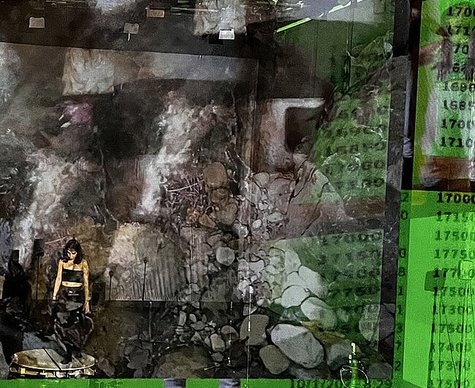
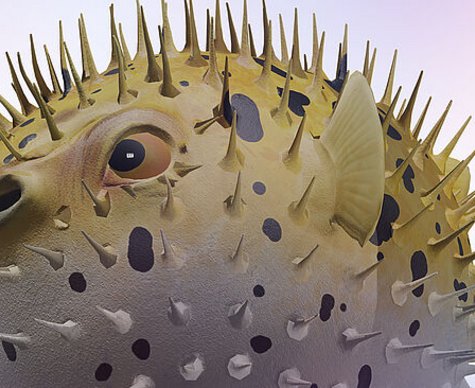
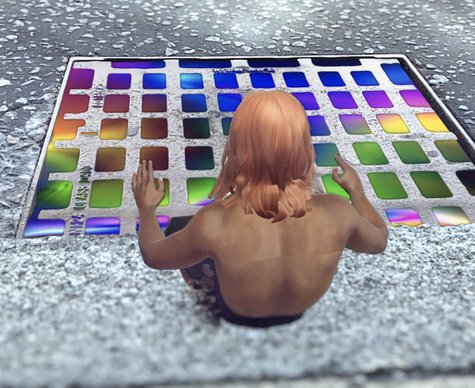
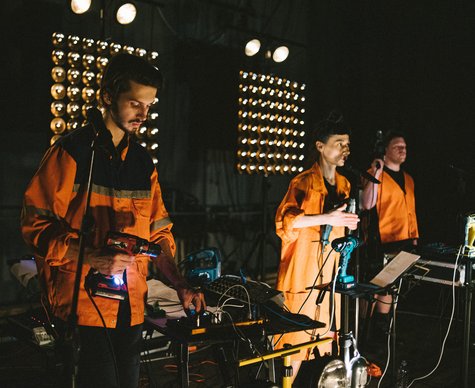
Together with the DIGITAL SPRING Festival at ARGEkultur Salzburg and the DIGITHALIA Festival at Schauspielhaus Graz, HAU Hebbel am Ufer launched an open call in autumn 2025 to develop digital art projects on this topic. As a result, the following six artists and collectives were selected:
The artist duo eeefff and the artist Chinedum Muotto from Berlin; artist Nina Vasilchenko and a collaborative project by the collectives gold extra and Kronberger & Kronberger from Salzburg; works by the artist groups SOAP and Planetenpartyprinzip from Graz. All works will be shown at www.hau4.de.
The project involves mentoring by Wikimedia Germany for the artists by Riham Abed-Ali and Christopher Schwarzkopf.
Riham Abed-Ali is a knowledge equity officer at Wikimedia Deutschland e. V. and works strategically and substantively to promote knowledge equity. Her focus is making marginalized knowledge more visible and improving access to it. This is achieved through risk and needs analyses, as well as needs-based support and consulting, among other things.
Christopher Schwarzkopf is a project manager for marginalized knowledge at Wikimedia Deutschland e. V. He works primarily on projects that aim to make marginalized knowledge visible and reusable as free knowledge. His particular focus is communicating knowledge about how content can be freely licensed, what advantages this offers, and what challenges can arise in the process.
Dates
Past
Credits
A cooperation between HAU Hebbel am Ufer, ARGEkultur Salzburg, and Schauspiel Graz. Supported by: Wikimedia Deutschland.