Lavinia Vago: It started as a small studio practice for just a group of professional dancers. We were really craving a space to move and say fuck you to all the rules of training, and we also wanted to create a space that felt welcoming to everyday people. We were like: everyone can dance, why limit that experience to the professional training? So, we were playing around with the format for many years. It was around 2016, so already 6 years in, when we started to understand which format felt right, and people were excited about finding this space of joy and release and togetherness. It was just growing organically. By 2017, 2018, we were doing classes multiple times a week with 70, 80, 90 people in multiple cities.
There was already this energetic pulsating happening. In 2020, we were on the bridge of this growth, and lockdown shifted us to online. The online space was very fascinating because we realized that we could communicate better with people because of the microphone, and because we were able to share more cues around what we were doing with our body, and also, share a little bit more of our personality, whether in a big space with 100 people. Usually, we put the teacher in the centre of the space without a mic, and we move along with a lot of people. So, people often cannot hear what we say. The online space created this huge explosion because everybody could join from their own living room, and it became this extra accessible practice. Especially during Covid, it was a moment where everybody needed to move and needed a sense of joy and release and togetherness.
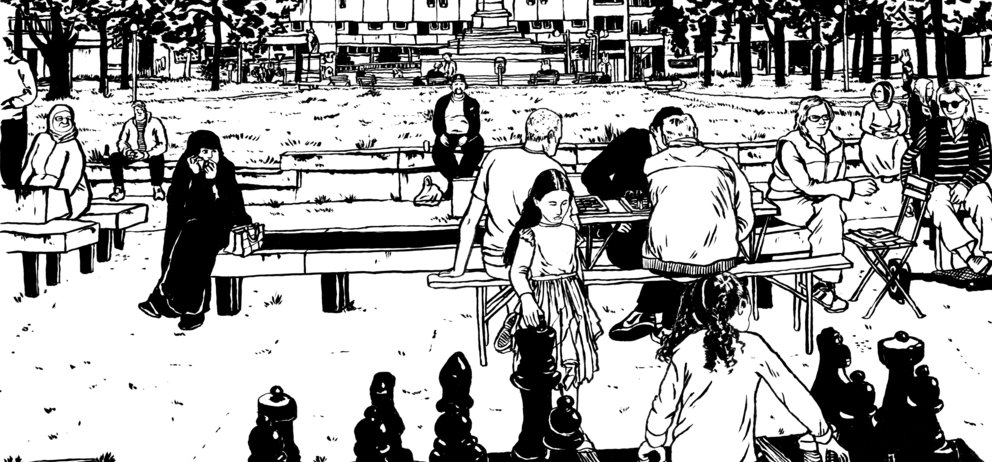
In the summer of 2021, I was like: I can feel that people want to come back together. I missed the smell of sweat of people around me. I missed the ephemeral, and so we started exploring with outside spaces. We realized that the energy was really changing, because it can be somewhat intimidating to go into a dance studio, or a yoga studio, or a gym. There's a sense of intimidation, there are also some barriers regarding accessibility, and the moment we went outside, there was a new charge. When you're outside, you feel freer and more energized, and people would also watch and be curious. And then slowly, people would join from the outskirts, and it created this reverberation. We've been exploring more and more, especially in the summertime, outdoor events, people bring their children, and people of all ages come. It feels like we have broken some barriers here.
Petra Poelzel: When you speak about the outdoors, is it a park you're referring to?
Lavinia Vago: Parks, plazas, yes. We have this big event in Lincoln Center Plaza, which is a large space. One of the most iconic things that we've been doing for a few years is in Seattle, and I taught it last summer. I had 600 people, because it's this large grass park, and, so there's a lot of people that can kind of join from here, but then people start joining from the outskirts and just becomes this large reverberation of energy.
Petra Poelzl: I really appreciate that idea of reverberating energy. It also connects to what you mentioned earlier about cues – that in large groups, people don’t naturally hear them. In the digital space, that became much more accessible. In public space, however, the cues are less audible; instead, people tend to follow the collective movement and go with the flow, which I find very compelling and beautiful to even think about.