This event can be experienced both aurally and visually.
Candice Breitz
A Song for Esther
With Aeham Ahmad, Die Anstalt, Bejarano & Microphone Mafia, Lurje Judelman Shneyveys, Dejan Jovanović + Oana Cǎtǎlina Chiţu, Rasha Nahas, Lie Ning, Polly Ott, Peaches, Sialan Quartet, Lili Sommerfeld a.o.
- Music
- Performance
English /
with German surtitles /
approx. 150 mins.
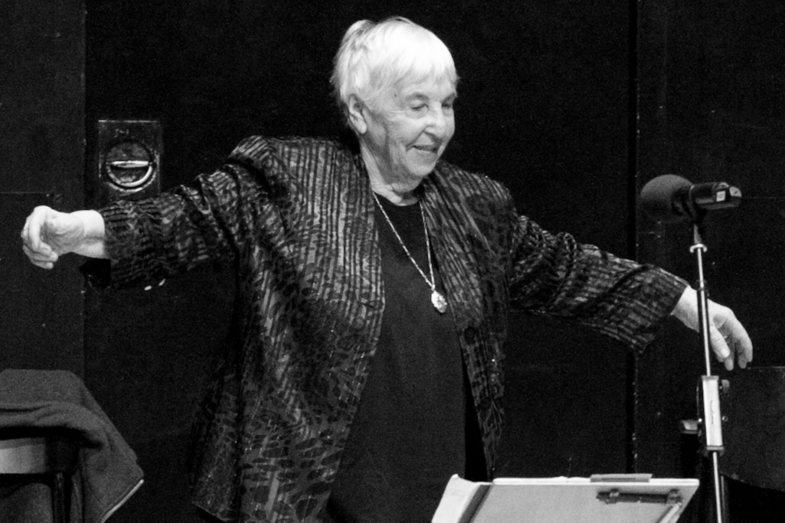

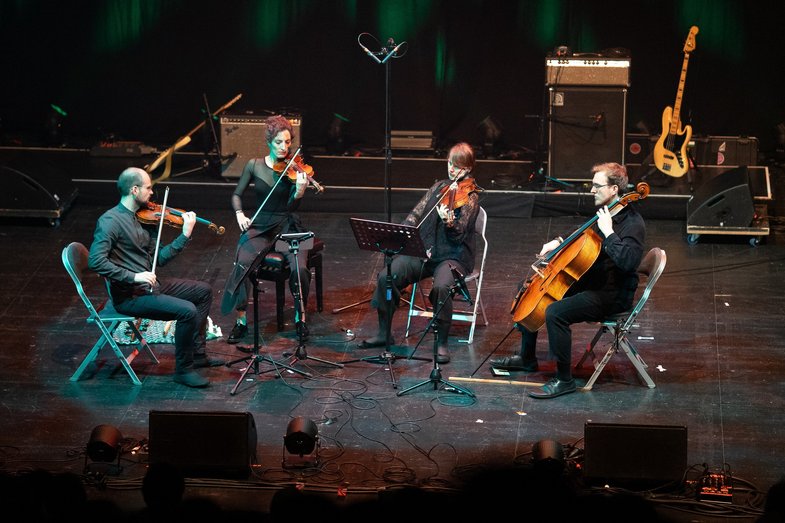
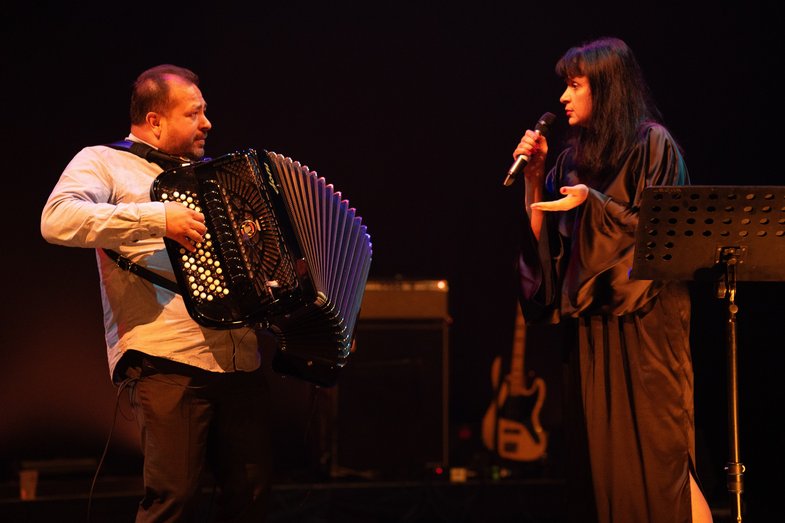
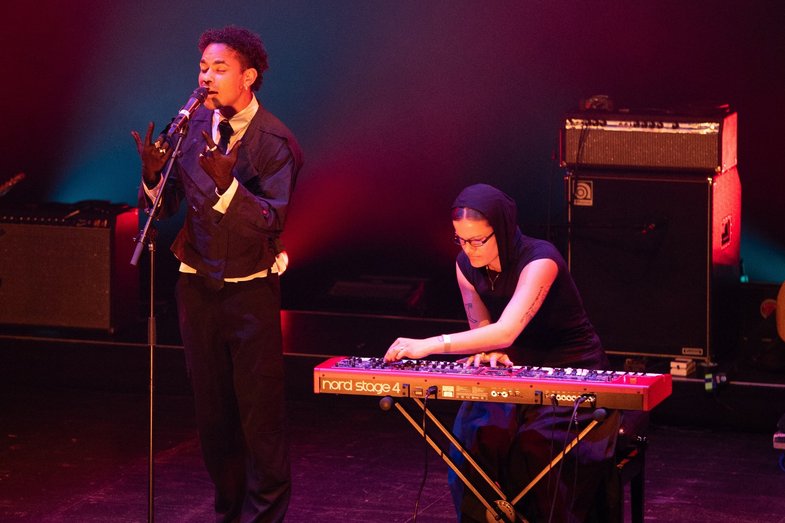
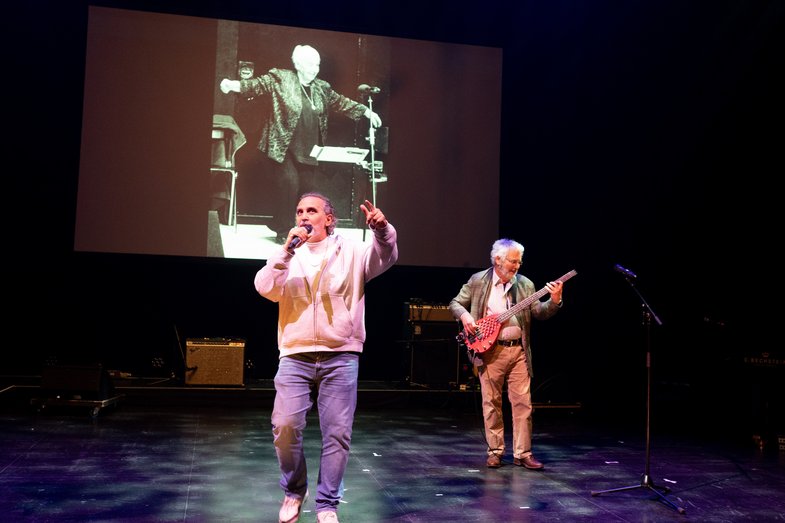
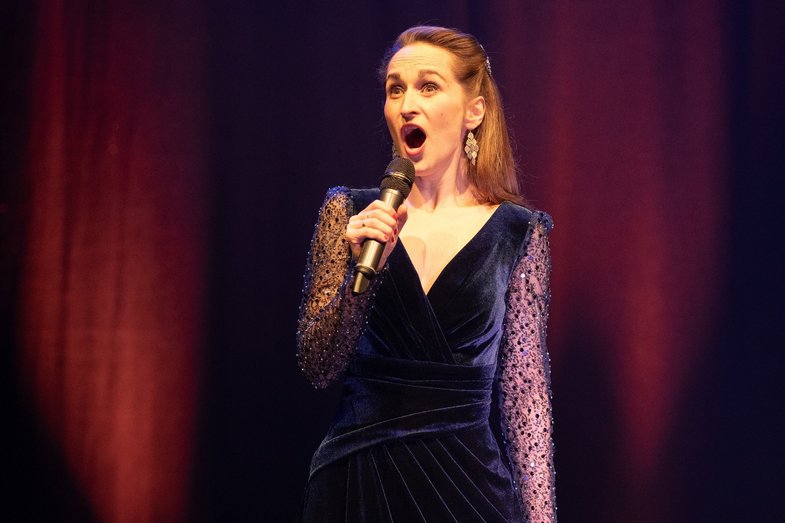

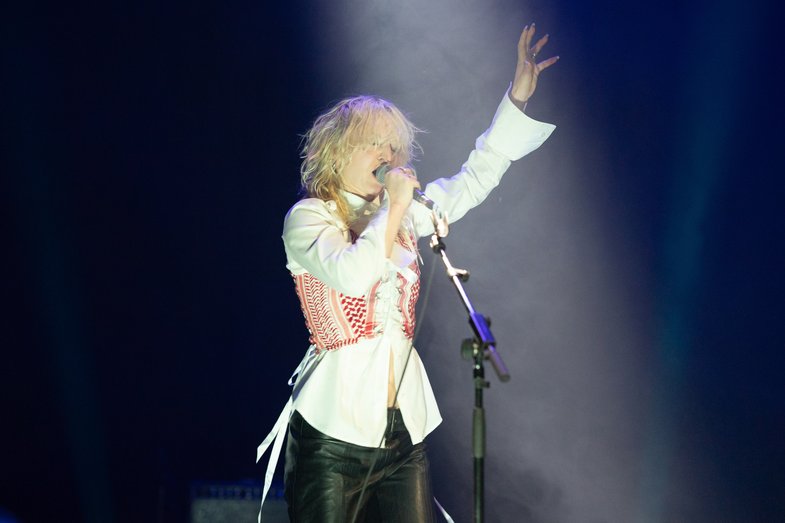

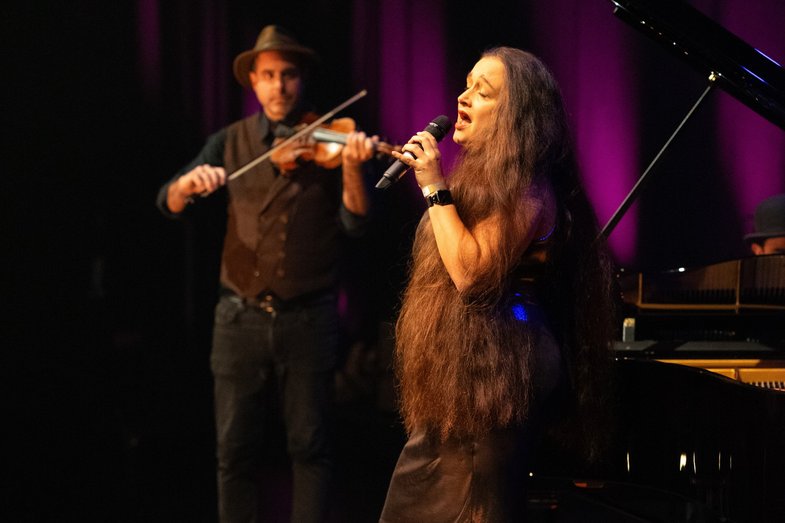
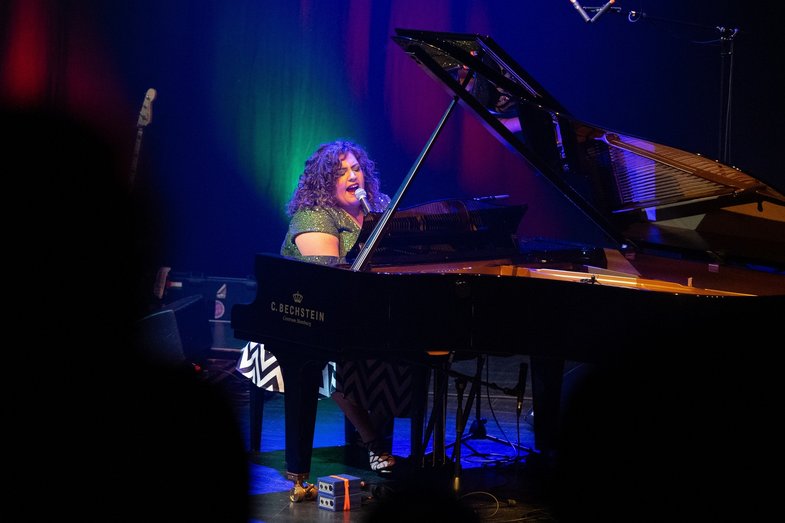
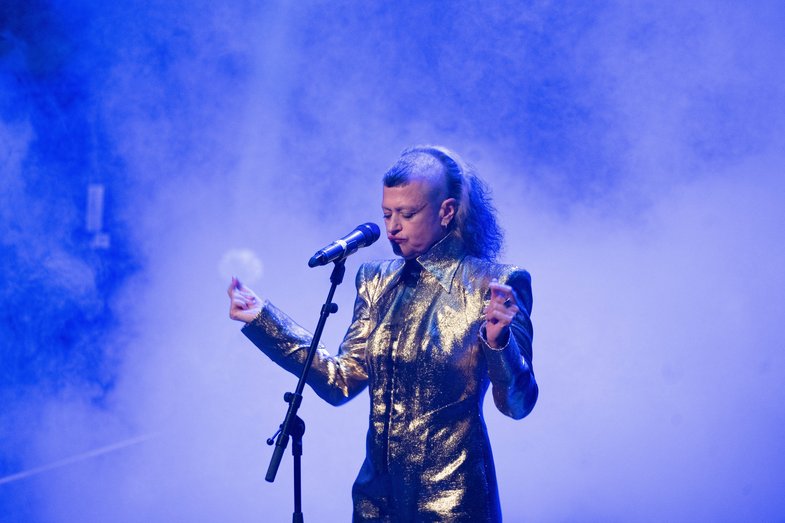
What agency is available to artists and musicians in times of genocide and repression? A century after the birth of Holocaust survivor Esther Bejarano, this conceptual concert considers the enduring resonance of her legacy of defiance – both as an activist and as a musician – for the present moment.
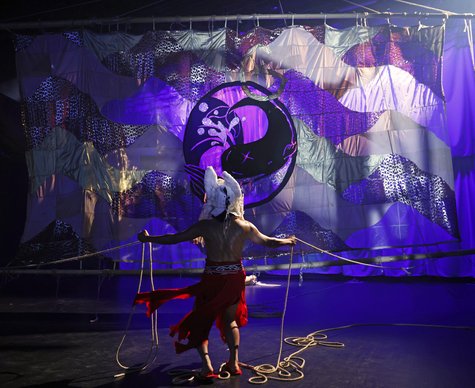
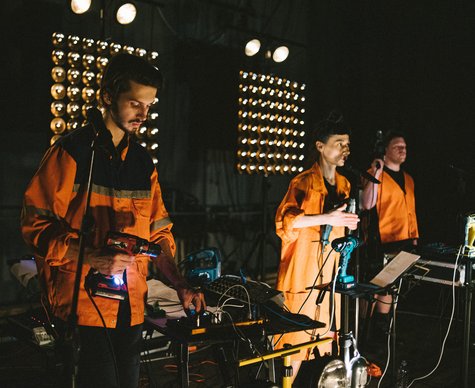
“A Song for Esther” is an act of remembrance conceived to mark Esther Bejarano’s absence, a transient monument in the shape of a concert. At the invitation of artist Candice Breitz, an extraordinary line-up of musicians will take to the stage to pay tribute to the tireless antifascist activist and musician:
Alongside Breitz, the evening will feature Peaches, Lie Ning, Rasha Nahas, Polly Ott, Aeham Ahmad, Lili Sommerfeld, Dejan Jovanović + Oana Cătălina Chiţu, Die Anstalt, Lurje Judelman Shneyveys, the Sialan String Quartet, and – as the evening’s special guests – Joram Bejarano and Kutlu Yurtseven of Microphone Mafia, the hip-hop band that played over a thousand concerts with Esther (the last of which took place just weeks before her passing at the age of 96).
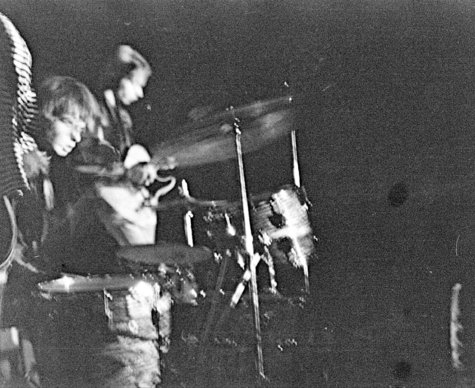
Born to a Jewish family in Saarland in 1924, Bejarano was 18 years old when she was deported to Auschwitz-Birkenau. She understood immediately that the brutally heavy labour she was forced to perform was intended to annihilate her. When she was put forward to become a member of the extermination camp’s ‘Women’s Orchestra,’ she sensed a possibility to escape an otherwise certain death.
As she would explain in later life, Esther’s survival ultimately hinged on her ability to play a particular song for the orchestra’s conductor. During an unimaginably dark audition, she was told to prove that she could perform a sugary wartime hit titled ‘Bel Ami’ on an accordion that was hastily thrust into her arms. She had never played the instrument before. Out of sheer desperation, Esther mobilised her piano skills and somehow managed to squeeze the frothy song out of the accordion.
Following the Holocaust, Esther took distance from ‘Bel Ami’ for seventy years. Towards the end of her life – to the astonishment of many – she returned to the song, incorporating it into her musical repertoire over hundreds of concerts. When asked to explain this perpetual return to the traumatic moment that had determined her fate, Esther would describe her performance of ‘Bel Ami’ as “an act of revenge.” The song had come to signify her ability to transcend the nightmarish experience of having been, quite literally, instrumentalised by Nazi Germany.
With fascism on the rise across the globe, ‘A Song for Esther’ offers a fugitive site for the expression of embodied resistance. Each of the featured musicians and bands has committed to performing a single song that is far removed from their usual repertoire during the concert. One doesn’t always get to choose one’s own instrument as an artist, or the song that one plays on it. There nevertheless remains potential – both political and creative – in the moment of performance.
‘A Song for Esther’ has been planned in dialogue with the Bejarano family.
Dates
Past
Further Information
Visitor note
Price: 17–29 €, reduced 9–20 €
Credits
Production: Candice Breitz. Co-production: Kampnagel, City Curator of Hamburg. Funded within the framework of the Alliance of International Production Houses by the Federal Government Commissioner for Culture and the Media. Supported by: Ilse and Dr. Horst Rusch Foundation.




Location
HAU1
Stresemannstr. 29, 10963 BerlinThere are two marked parking spots in front of the building. Access to the Parkett by means of a separate entrance with lift when necessary. Barrier-free restroom facilities are available.