On Justice #5
Impunity in uncertain times
With Tun Khin (Burmese Rohingya Organisation UK, Myanmar), Priscilla Yagu Shalom Ciesay (Women’s Association for Women & Victims’ Empowerment, Gambia), Ruham Hawash (Palestine Speaks), Kateryna Buriakovska (Kharkiv National Law University & Friedrich-Alexander University Erlangen) and a keynote address by Wolfgang Kaleck (ECCHR)
Moderation: Arne Bardelle (ECCHR)
- Dialogue
English /
approx. 150 mins.
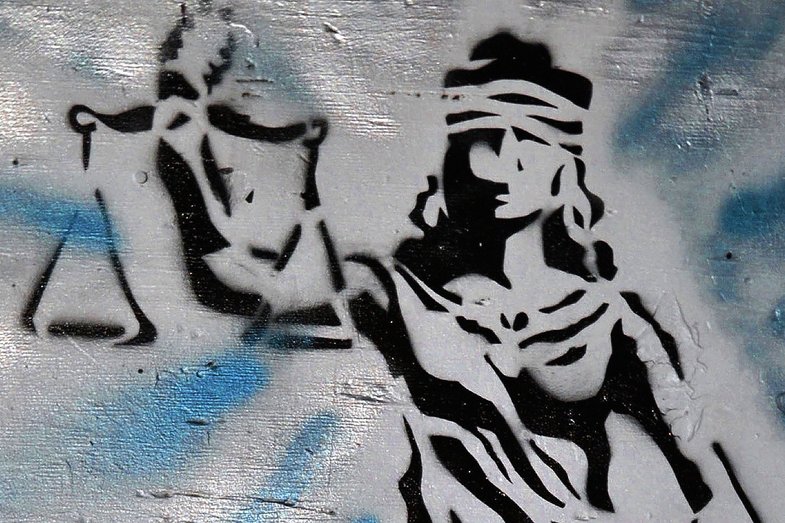
Serious human rights violations leave wounds that last far beyond the moment they occur. When perpetrators go unpunished, this not only hinders social reconciliation and a reckoning with the past, but also denies those affected their right to truth, justice and reparation. Only serious confrontation and coming to terms with the past can address individual pain, break down structural injustice, and pave the way for a more just future.
Where national justice fails, international institutions, such as the International Criminal Court and criminal proceedings based on the principle of universal jurisdiction, can intervene. But is there hope for the fight against impunity when autocrats systematically undermine international law?
The fifth event in the “On Justice” series brings together voices from Syria, Palestine, Gambia, Myanmar and Ukraine – five contexts marked by systematic violence and human rights crimes, but which are also places of courageous resistance. Here, people are fighting back, demanding justice and working to make hope visible.
Together, we will listen to their experiences, discuss what connects them – and ask: in uncertain times, where can we find hope for a world without impunity?
Tun Khin (Rohingya name: Ziaul Gaffar) was born and brought up in the state of Arakan, Burma. He is Co-Founder and President of the Burmese Rohingya Organization UK, which campaigns worldwide for the rights of the Rohingya people, an ethnic minority in Myanmar. Tun Khin has briefed many officials and parliamentarians around the world on the genocide committed against the Rohingya. In November 2019, Tun Khin filed a case in Argentina under the principle of universal jurisdiction against the Myanmar military and civilian government for genocide, war crimes and crimes against humanity.
Priscilla Yagu Shalom Ciesay is a human rights lawyer and expert in international humanitarian law with over 20 years of experience in legal practice and the United Nations. She has worked globally – including in New York, Sudan, Afghanistan and The Gambia – advocating for women, marginalized communities and transitional justice. As a former UN mandate holder, she now advises the Office of the United Nations High Commissioner for Human Rights (OHCHR) and the United Nations Development Program (UNDP) in The Gambia. She is Co-Founder of the Women's Association for Women & Victims' Empowerment-Gambia. She is currently on the Advisory Board of the Human Rights Practice Program at the University of Arizona.
Ruham Hawash is an activist and civil society organizer, who focuses on strengthening grassroots efforts in Palestine, Syria and beyond. She promotes collective action by civil society actors with the aim of building broader liberation movements. Ruham’s approach is rooted in accountability, justice and the ongoing work of decolonization in daily life and action. They were a joint plaintiff in the al-Khatib trial, the world's first trial on Syrian state torture.
Wolfgang Kaleck is a lawyer, author and General Secretary of the European Center for Constitutional and Human Rights (ECCHR), an independent human rights organization. He has published several books, most recently “Concrete Utopia” (2021), has been a PEN member since 2011, and was awarded the Hermann Kesten Prize in 2014. He is also Edward Snowden's legal counsel.
Kateryna Buriakovska is an Assistant Law Professor at Kharkiv National Law University in Ukraine. Since July 2022, she has been a visiting lecturer and researcher at Friedrich-Alexander University in Erlangen. Her academic work focuses on issues related to business and human rights, as well as armed conflict. As a human rights lawyer, she supports Ukrainian NGOs in promoting accountability for serious human rights violations committed during Russia’s war of aggression.
Moderation: Arne Bardelle is Senior Legal Advisor at the European Center for Constitutional and Human Rights (ECCHR) and works in the International Crimes and Accountability program. He studied law in Berlin, Germany and Istanbul, Turkey, and is licensed as a lawyer in Berlin.
Dates
Past
Credits
A discourse series by HAU Hebbel am Ufer in cooperation with ECCHR (European Center for Constitutional and Human Rights). Funded within the framework of the Alliance of International Production Houses by the Federal Government Commissioner for Culture and the Media.


Location
HAU1
Stresemannstr. 29, 10963 BerlinThere are two marked parking spots in front of the building. Access to the Parkett by means of a separate entrance with lift when necessary. Barrier-free restroom facilities are available.