Right to Housing – Understanding Homelessness
Table talks with Berlin initiatives and experts
With AK QUEER*WOHNEN, Barka e.V., Berliner Obdachlosenhilfe, Gitschiner 15, Frostschutzengel – GEBEWO pro gGmbH, FSD-Stiftung – 24/7 Notunterkunft für Frauen Kreuzberg, Housing First Queer der Schwulenberatung Berlin, Querstadtein e.V. Stadtführungen, UfO Berlin – Union für Obdachlosenrechte, Unter Druck e.V., Wohnungslosentagesstätte Schöneberg / Moderation: Vera Klocke
Please register at tickets@hebbel-am-ufer.de
- Dialogue
German /
4.5 hrs.
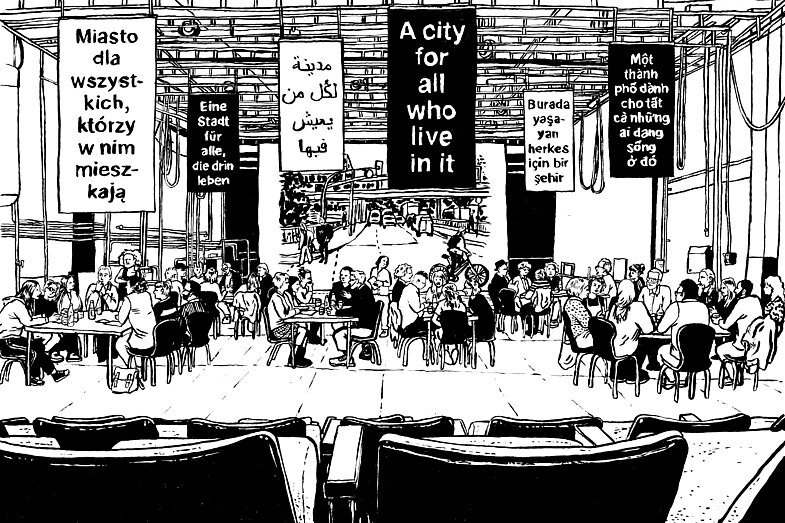
The Berlin Senate expects more than 100,000 unhoused and homeless people by 2030. Behind this number lie lived realities that too often remain invisible. During the festival “Berlin bleibt!”, HAU Hebbel am Ufer invites you to take a closer look – and above all: to enter into conversation.
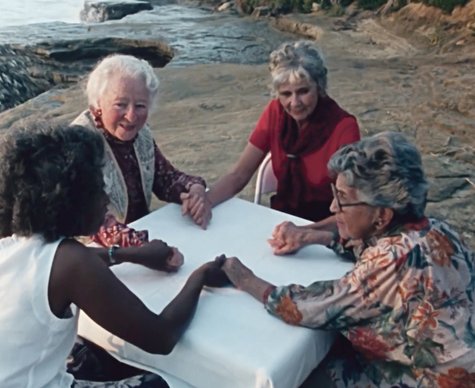
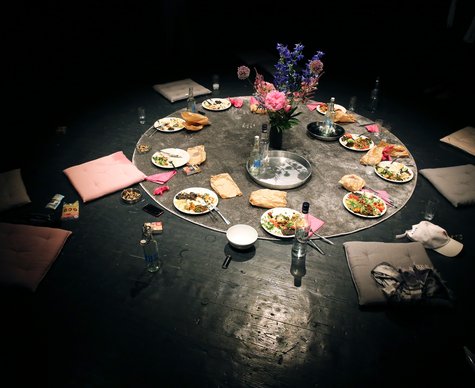
In “Right to Housing – Understanding Homelessness”, people with and without lived experience of homelessness will come together – individuals who are actively engaged in initiatives, associations or social organisations working across different areas of housing and homelessness support. Together with visitors, they will meet in small-group table talks. Everyone is invited to pull up a chair, listen, ask questions – and to move between topics by switching tables. The conversations will cast light on a range of subjects: lived realities on the streets, the possibilities and limits of voluntary work, activist strategies and gaps in the support system, as well as questions of digital participation and the human right to housing. What would Berlin need – politically and socially – to change these realities? At the heart of it all are the people involved: their experiences, their perspectives and their knowledge.
Schedule
13:00 Arrival
13:30 Welcome
14:00 First discussion round
14:45 Break with food and drinks
15:30 Second discussion round
16:15 Short break
16:30 Closing discussion
Overview of the Tables
Table 1: Publicly funded services: More Than Just a Band-Aid Solution?
Berlin is investing in street outreach, cold-weather assistance, day and counseling centers. At the same time, the number of people without housing and homeless people is rising. What does it say about a city when it expands emergency services but leaves structural causes unaddressed? What are the possibilities and limitations of these municipal services?
At the table: Elke Löbel (project director of the 24/7 emergency shelter for women at Hallesches Ufer 30 in Kreuzberg, a project of the FSD Foundation), Nadine Simon-Wrobel (director of the Schöneberg Day Center for the Homeless run by Unionhilfswerk), and Lothar Schmischo from UfO (Union for the Rights of the Homeless).
Table 2: Volunteer Work: Between Public Services and Cultural Participation
Volunteer work is important, but it often fills gaps created by public policy. How is this ambivalence addressed? What does participation mean beyond mere provision of services? And who decides who gets to help shape the system and who remains “merely” a recipient?
At the table: Representatives of Berlin’s homeless services, Uwe Mertens from the language café of UfO (Union for Homeless Rights), as well as Marta Scordino and Michael Arlit from Unterdruck e.V.
Table 3: Homeless, Queer, and Without Housing: Double Invisibility
The support system is geared toward social norms and thus creates its own forms of exclusion. For queer people who are homeless, this means, for example, that places intended to offer protection can actually be unsafe. This table examines the normative assumptions on which support systems are based and discusses what is needed to create better services for queer people.
At the table: Anjes Sanogo (Schwulenberatung Berlin) and Kathrin* Schultz (AK QUEER*WOHNEN).
Panel 4: Digital Participation as Social Participation
Digitalization is seen as a way to facilitate participation. But what if, without a registered address, you have no access to digital media – and thus communication with government agencies, finding housing, and accessing social infrastructure becomes impossible? This roundtable discusses the connection between digital and social participation and examines the specific barriers that homeless and housing-insecure people must overcome in order to be “online.”
At the table: Conny Tiez and Marita Leßny from Gitschiner 15 e.V., Domingo Waller from Neue Chance Berlin e. V., Digitales Zuhause
Table 5: Who Falls Through? Exclusions Under Social Welfare Law and Bureaucratic Barriers
Bureaucracy is often seen as apolitical – but in fact, it is highly political: It determines who gains access, who has to wait, and who falls through the cracks. This is particularly evident in the social welfare exclusions faced by people with a migration background, as well as EU citizens – but also by people with mental health conditions or those without identification documents. This panel asks: Who is the system designed for – and how could it be changed to promote greater accessibility and long-term change?
At the table: Julie Markussen (Barka e.V.), Monika Slobodzian (Facility Director, Frostschutzengel der GEBEWO pro gGmbH), and Thomas Lindlmair from UfO (Union for Homeless Rights)
Table 6: Resistant Practices: Tools for Visibility
This table discusses various resistant practices and explores how visibility can be created for the issue of homelessness and the right to housing. But when and how does the risk arise that this visibility might be co-opted?
At the table: Balint Vojtonovski and Julia Kohnen from UfO (Union for Homeless Rights) and Janet Amon (city tour guide at querstadtein e.V.)
Dates
Past
Credits
Part of “Berlin bleibt #5”, a festival by HAU Hebbel am Ufer. Funded by: Hauptstadtkulturfonds.
Location
HAU2
Hallesches Ufer 34, 10963 BerlinThere are two marked parking spots in front of the building. Barrier-free restroom facilities are available. Four relaxed seats are available in the first row of HAU2.