Contributors: Fadi Aljabour, Alina-Aljosha Anufrienko, Walla Capelobo, Zéna Chite, Beo Da Silva, Bruno De Marco, Marie Dewey, Sumona Dhakal, Ana Júlia Fortes, Ana Gabriela García, Claudia H, Daniele Paris, Dré Philippens, Anne Nascimento, MN Reyna, Claudia Redka, Léna Serdjebi, Julia Siebeky, Yumo Cheng
Spatial Strategies (weißensee kunsthochschule berlin)
Spielraum
26.6.–4.7.
- Game
- Installation
- Performance
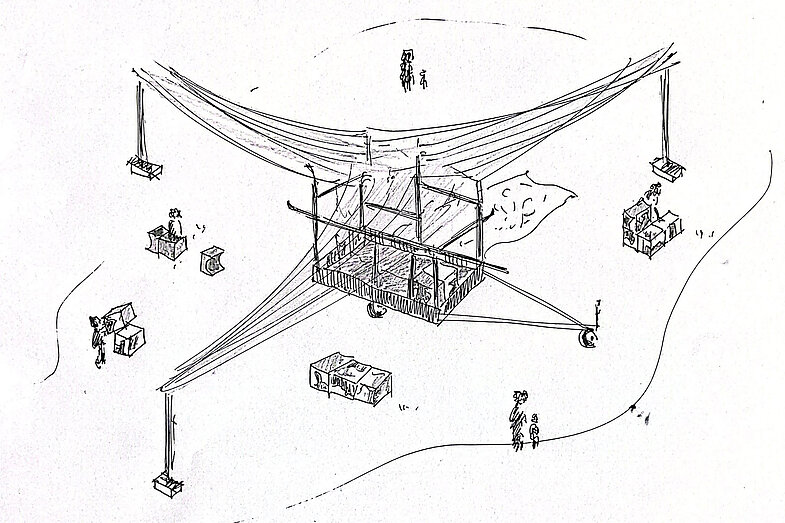
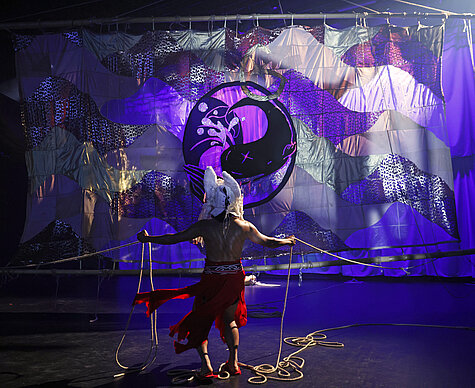
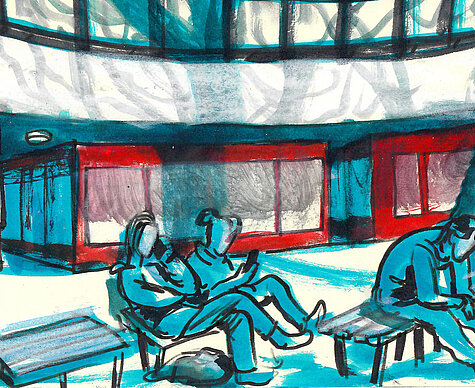
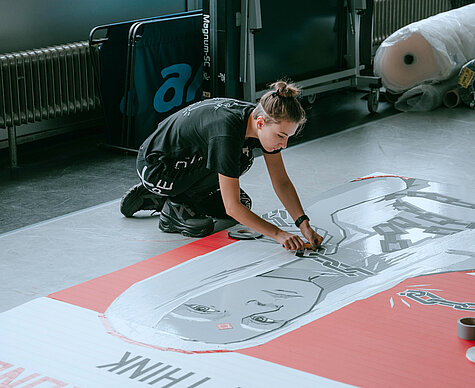
During the “Berlin bleibt!” festival, students of the MA Raumstrategien at weißensee kunsthochschule berlin present “Spielraum”, a mobile vessel that moves between Mehringplatz, Macherei, HAU, and the surrounding neighbourhood. Across four chapters, the mobile structure temporarily unfolds into a place to gather, play around, listen closely, ignore, move, and exchange. Visitors are invited to encounter interactive installations, performances, games, readings, and a communal feast, while accompanying the Vessel – a kind of entity or soft playbox on wheels - on its journey through Kreuzberg. At times in motion and at times stationary, “Spielraum” serves as a temporary meeting point connecting different locations, people, and perspectives. Follow the schedule below to join the vessel at its various waystations throughout the festival.
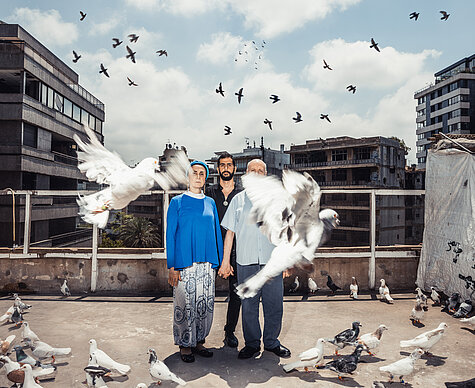
“Spielraum” is a collective platform that reimagines public space as a shared habitat. Inspired by pigeons as resilient urban co-inhabitants, the project explores encounter, perception, play, and coexistence across human and non-human worlds.
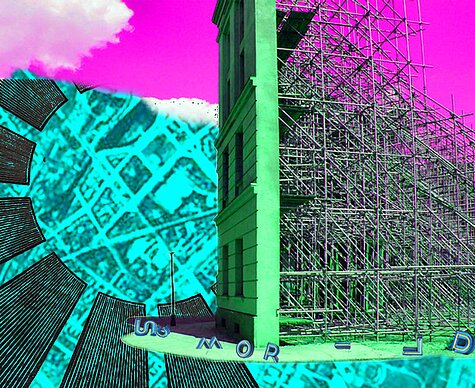
Conceived by students of the MA Raumstrategien, “Spielraum” has been developed through a site-specific research around HAU, die Macherei, and the neighbourhood of Mehringplatz in Kreuzberg, a site shaped by the promises of urban improvement and the pressures of displacement.
Fri 26.6. | Chapter 1: Contact
17:00–20:00 | Mehringplatz (2nd Rondell)
The arrival of the Vessel initiates a process of familiarisation between visitors, site, and structure. Accompanied by the “Little Pigeon”, the chapter explores how curiosity, attention, and proximity emerge through repeated encounters.
17:00–18:30 Arrival of the Vessel – mobile platform enters Mehringplatz
from 18:30 Appearance of the “Little Pigeon”
17:30–19:00 Elsewhere in Berlin: Architecture as Storyteller – performative reading circle and discussion
19:00–20:00 Vessel Gathering
Sat 27.6. | Chapter 2: Entanglement
16.00–18:00 | Mehringplatz
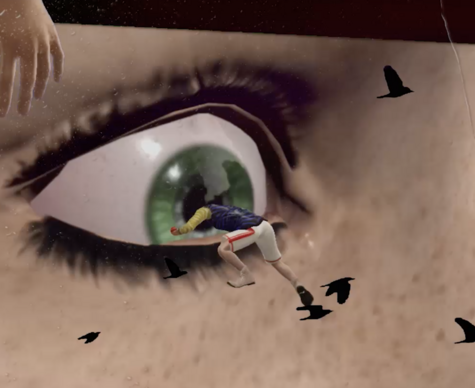
Guided by the “Little Pigeon” and the interactive perception device “DoveScope”, participants encounter the city from perspectives beyond the human scale. The chapter explores how public space is negotiated and shared among different bodies, species, and forms of inhabitation.
16:00–18:00 “Pigeon Revolution Game” – Interactive game
from 16:00 “DoveScope” – Interactive perception device
16:15–17:15 “An Advancing Hairline” – a public haircut performance exploring intimacy, visibility, and collective presence in urban space
18:00–19:00 Vessel Gathering
Thu 2.7. | Chapter 3: Impressions
14:00–16:30 | M40 / low capacity
How does the city become a resonant field shaped by its people? Movement, sound, and participation generate traces that accumulate within the project. Inspired by multispecies perception, the chapter invites participants to listen, draw, and imagine the city differently, with a soundscape created from collective recordings of the neighbourhood.
14:00–16:00 “Kinetic Groundfloor!” – Interactive installation
14:30–16:30 “In Touch with Sound” – Interactive soundscape
14:30–16:30 “Impossible Dreams” Participatory sculpture
Fri 3.7. | Chapter 4: Gathering & Transformation
15:00–Open End | HAU2
The final chapter culminates in a collective feast informed by the social behaviour of pigeons as urban co-inhabitants. Gathering, conversation, collecting ornaments, and shared rituals become tools for imagining alternative forms of coexistence.
15:00–17:00 “Kinetic Groundfloor!”
15:30–17:30 “In Touch with Sound”
15:30–17:00 “Impossible Dreams”
from 15:30 “DoveScope” and workshop “Ornamental Treasuring”
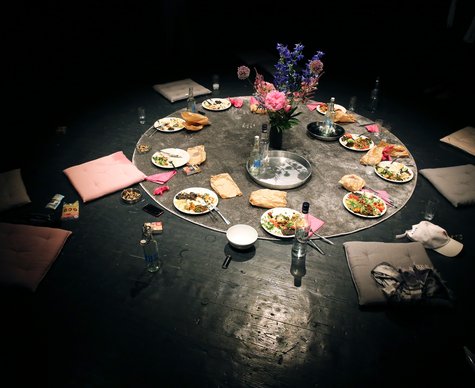
19:00–open end “Found Feast” – communal dinner inspired by pigeons worlding, using found objects and urban leftovers to collectively construct a tablescape from a non-human perspective.
Vorraum | M40 26.+27.6, 2.–4.7, 15:00–19:00 / low capacity
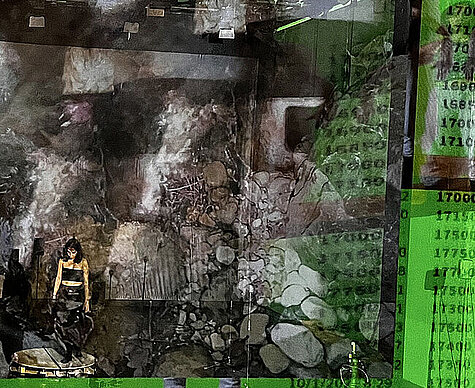
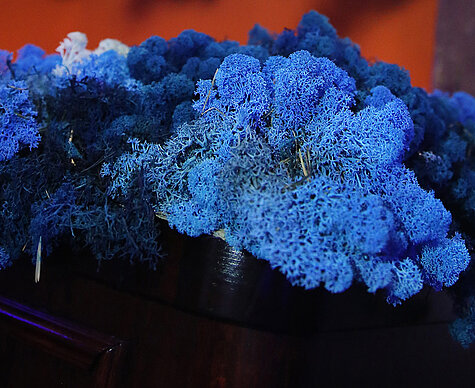
Throughout the public appearances of “Spielraum”, the M40 space remains open as a continuous “Vorraum” (prelude space). As a temporary zone of access, gathering, and lingering, it holds traces of the collective research processes, transformed into a soundscape where documentation, fiction, and urban residues overlap. Taking the form of a smaller, compressed room inside the existing architecture, the installation draws from forms of inhabitation found around Mehringplatz – pigeons nesting within housing cavities and urban gaps. Through sound, material fragments, and spatial proximity, the “Vorraum” shifts attention toward multiple perspectives, exploring the city as a shared habitat where different bodies, species, and stories coexist within increasingly constrained conditions.
Team
Dates
Past
Further Information
Visitor note
Credits
Part of “Berlin bleibt #5”, a festival by HAU Hebbel am Ufer. Funded by: Hauptstadtkulturfonds.
This project is realized in the framework of the SoSe 2026 seminars “Carrying the City Otherwise” by Prof. Pauline Doutreluingne and “Elsewhere in Berlin: Architecture as Storyteller” by Tonderai Koschke within the MA Raumstrategien, Weißensee Kunsthochschule Berlin.
Location
M40 (Hallesches Ufer 40)
Hallesches Ufer 40, 10963 BerlinOutdoor
Mehringplatz (Outdoor)
Mehringplatz 1, 10969 BerlinHAU2
Hallesches Ufer 34, 10963 BerlinThere are two marked parking spots in front of the building. Barrier-free restroom facilities are available. Four relaxed seats are available in the first row of HAU2.