Direction & Choreography: Ali Chahrour / Performance: Hala Omran, Leila Chahrour, Abbas Al Mawla, Ali Hout, Abed Kobeissy, Ali Chahrour / Music: Two or The Dragon: Ali Hout & Abed Kobeissy / Assistance to the director and choreographer: Chadi Aoun / Production: Ali Chahrour / Production management: Chadi Aoun & Christel Salem / Scenography: Guillaume Tesson, Ali Chahrour / Light design & technical direction: Guillaume Tesson / Light management: Pol Seif / Sound engineering: Benoit Rave / Communication: Chadi Aoun / Copywriting: Isabelle Aoun
Ali Chahrour
Told by My Mother
- Performance
- Dance
Arabic /
with German and English surtitles /
70 mins.
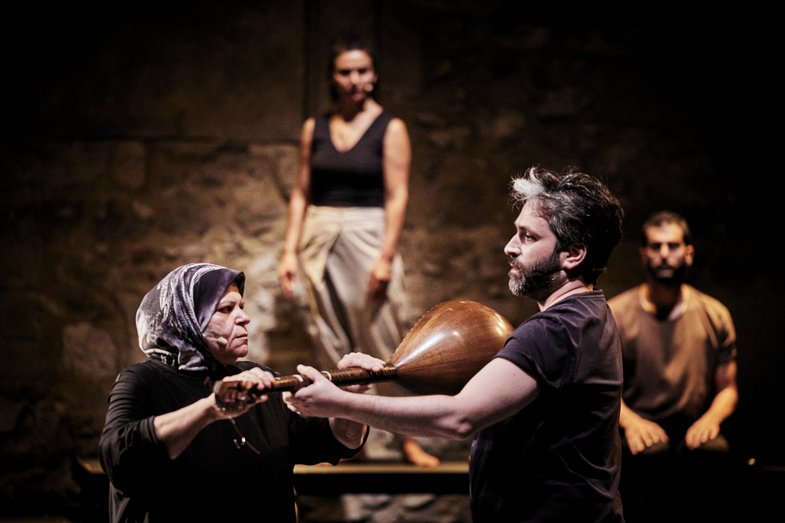
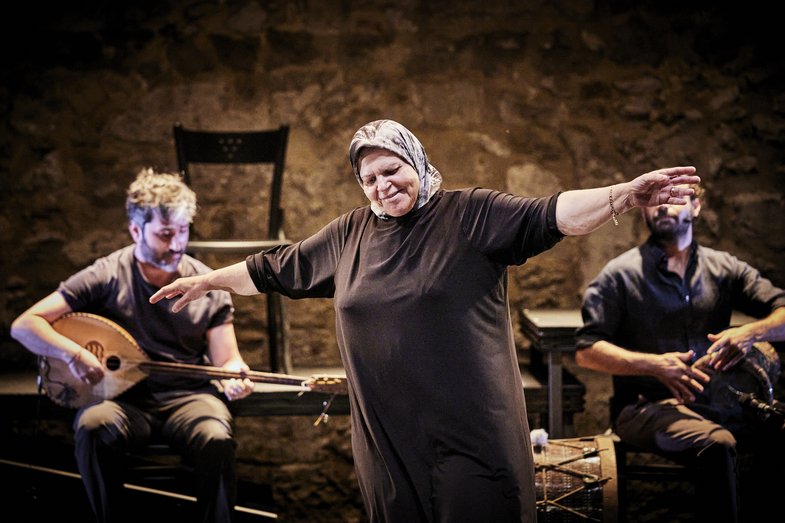
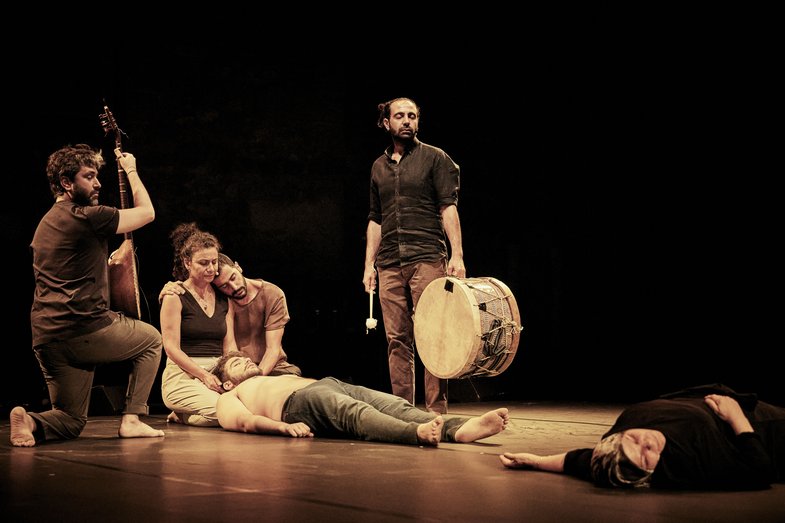
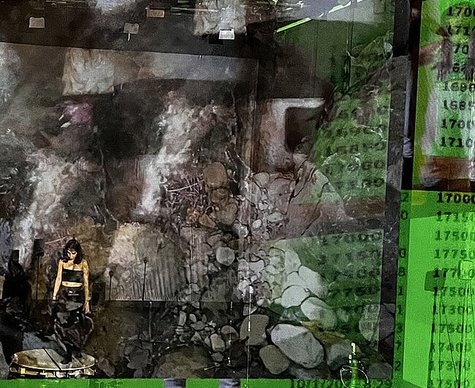
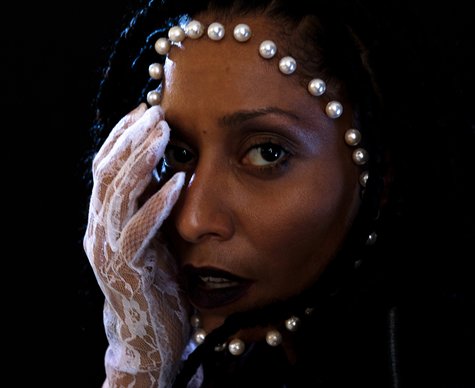
A tribute to mothers and their strife for resilience: inspired by his own family history and the collective memories of the Lebanese people, Ali Chahrour explores the power of love and tenderness in the face of loss and loneliness.
Following “Iza Hawa” and “When I saw the Sea”, HAU Hebbel am Ufer is now also presenting Ali Chahrour’s widely toured work “Told by my Mother”. The piece, created in 2021, has been performed at international festivals and venues – and is now set to be staged for the last time – in Berlin.
Choreographer and dancer Ali Chahrour paints a raw and deeply moving portrait of the mothers of Lebanon, without embellishment. But the images of mourning and sorrow cannot be separated from the current horrors in the Middle East.
Without sugar-coating anything, the dancer and choreographer Ali Chahrour paints an unvarnished and deeply moving portrait of the mothers of Lebanon – a country that has been scarred by conflict for years, is currently under attack from Israel and suffering under pressure from neighbouring Syria. “Told by My Mother” is rooted in authentic, intimate and deeply moving stories – stories of iconic mothers and their families, some of whom have been scattered or have disappeared. These are narratives preserved so that memory lives on and what remains is honoured.
One of the three central stories in “Told by My Mother” tells of Ali Chahrour’s aunt Fatima, who lost her son in Syria in 2015. Until her death in 2018, she searched tirelessly for him, without ever gaining certainty about his fate.
“I believe that my aunt Fatima did not die of the cancer that ate away at her lungs. She died the moment she lost hope of finding her missing son Hassan. An autopsy would have shown that her heart was no longer beating between those maternal ribs,” says the choreographer.
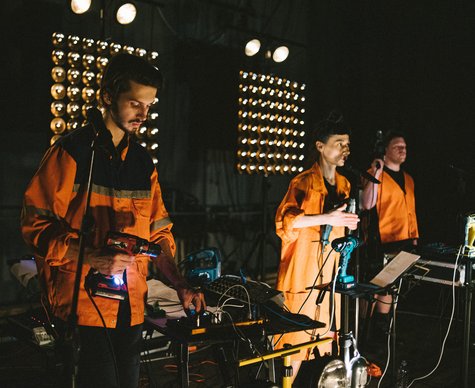
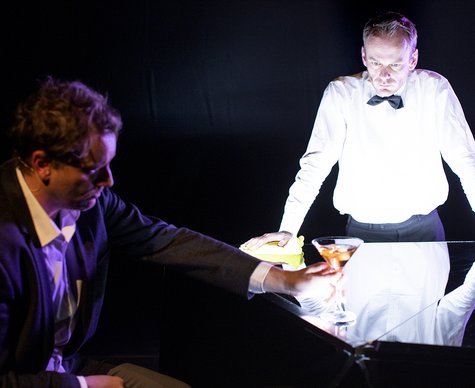
The live music by Ali Hout and Abed Kobeissy (percussion and buzouk) draws on the songs of those very families, sung in moments of both grief and joy. Thus, a vibrant anthology of the cultural heritage of Arab folk songs unfolds before the audience. The meandering songs reflect the endless pain of women who carry within them both unshakeable hope and paralysing fear. And yet, amidst all the suffering, moments of hope shine through.
Team
By viewing the video you agree that your data will be transmitted to and that you have read the privacy policy .
Dates
Past
Price: 17–29 €, reduced 9–20 €
After the performance on 6.6.: Artist Talk / Moderation: Petra Poelzl / English
Credits
Coproduction: Zoukak Theater, Arab Fund for Arts and Culture ”AFAC”, the Arab Arts Focus. Supported by: Stiftelsen, Studio Emad Eddin & Ford Foundation, Campania Teatro Festival, Saadallah & Lubna Khalil Foundation, Kunstfest Weimar, Zurich Theater Spektakel, Mahmoud Darwish Chair/Bozar, Institut français de Beyrouth, Barzakh, Beit el Laffe, KED, Mezyan, T-Marbouta, Tawlet, Eid Press.
Location
HAU2
Hallesches Ufer 34, 10963 BerlinThere are two marked parking spots in front of the building. Barrier-free restroom facilities are available. Four relaxed seats are available in the first row of HAU2.