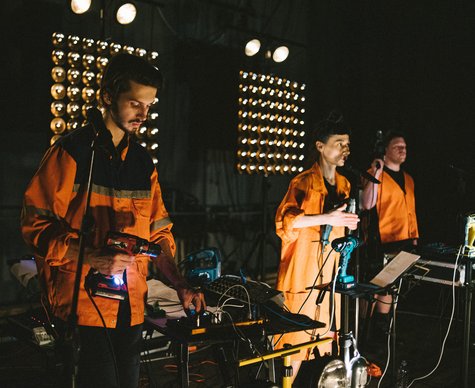
Artistic Direction, Stage Direction, Choreography, Text: Sophie Yukiko und ZOE (Marie-Zoe Buchholz) / Concept: Sophie Yukiko / Performance: Sophie Yukiko, ZOE (Marie-Zoe Buchholz) / Costumes: RENASTY / Musical Direction: Aaro Assy / Setdesign: Lea Steinhilber / Lichtdesign: Sascha Görg / Production Management: Wiebke Wesselmann / Ymusic
Sophie Yukiko & ZOE
BODEN
- Performance
- Dance
German /
English /
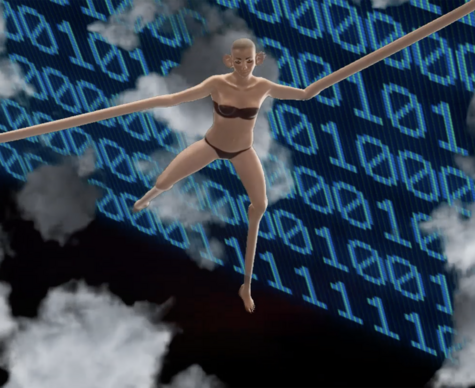
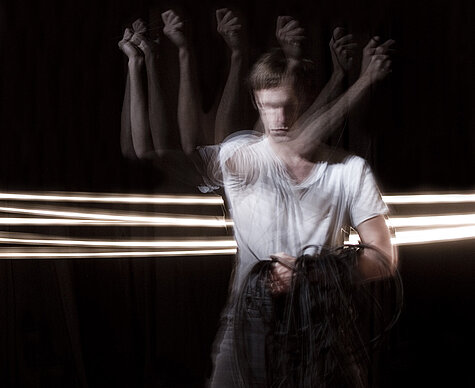
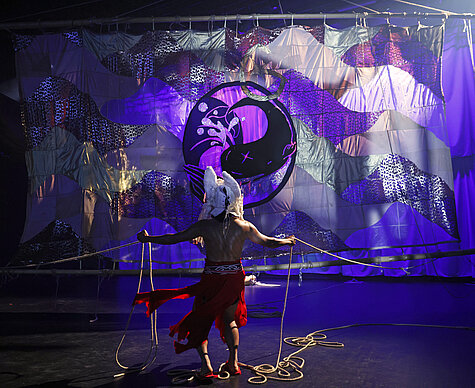
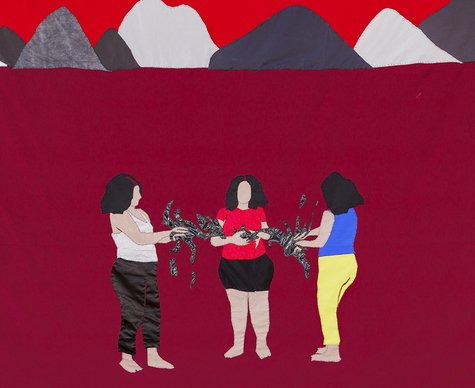
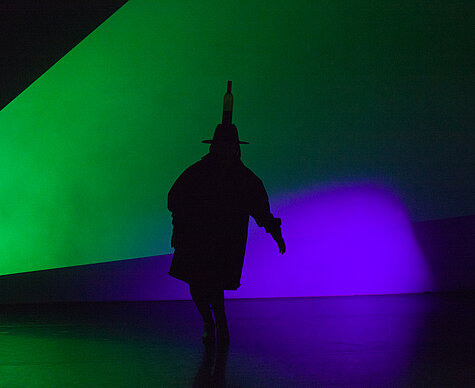
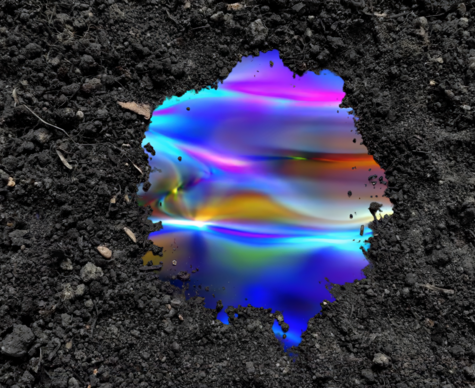
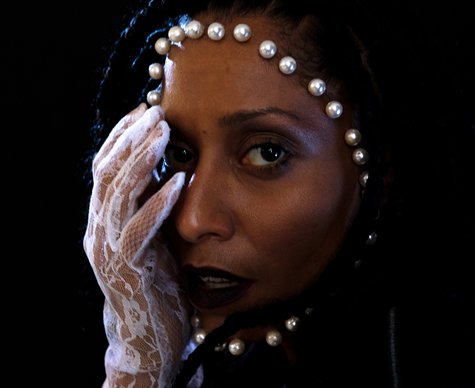
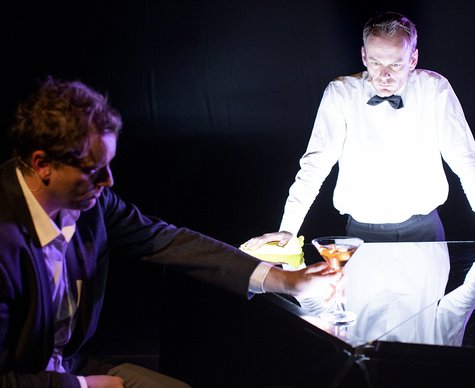
Who has the right to which land? Sophie Yukiko and ZOE take the figure of the witch as their starting point and, through voguing, reimagine her as a figure of resistance. “BODEN” tells a story of dispossession, exclusion and the search for a sense of belonging.
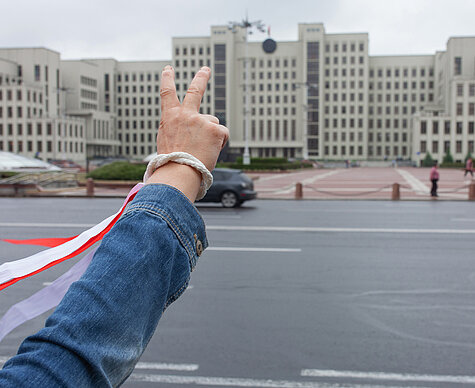
The feminist activist and author Silvia Federici describes how the era of the European witch hunts brought about a fundamental shift in attitudes towards land, community, property and soil. Communal land was increasingly privatised, social structures were dismantled and new forms of ownership and control were established. For Federici, the persecution and murder of women as witches is linked to an era of violence, dispossession and displacement.
“BODEN” traces these historical interconnections and explores how the German nation and its understanding of national identity took shape – and, with them, the construction of a “non-German” figure, denied a sense of belonging and the right to exist on German soil. From a Black German perspective, the artists Sophie Yukiko and ZOE engage with these themes through the figure of the witch. Using voguing, a dance style of the queer ballroom subculture, they reclaim the witch as a figure of resistance and turn their attention to dispossession, exclusion and the question of who owns the land, history and a sense of belonging.
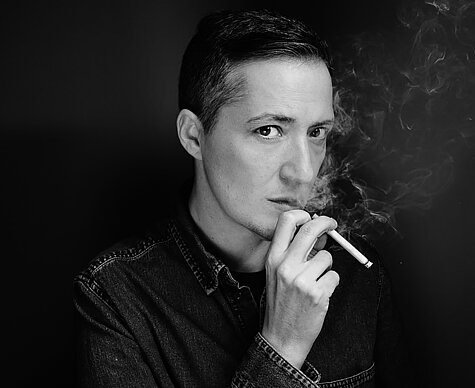
Sophie Yukiko is a German-US-American artist working in film and theatre. In her work, she explores the concept of ritual and club culture – themes she addresses through dance and text. During her professional career as a dancer, she became part of the ballroom scene and has since devoted herself to political art.
ZOE is an interdisciplinary performance artist and curator from Düsseldorf. In her works, she reflects on rehabilitation, transformation and the (re-)appropriation of body and space as well as on the relation between power and marginalisation. Her art, to her, is a language of resistance that scrutinises narratives, fills blank spaces and expands narratives to focus on the perspectives, the visibility, and the advocacy of structurally discriminated lived realities and communities. ZOE is part of the first German ballroom generation and counts as one of the leading figures for this culture in the German-speaking countries.
Team
Dates
Current
Price: 17–22 €, reduced 9–12 €
After the performance on 17.12.: Artist Talk
Credits
Production: ZOE/HAUS MAWU und Sophie Yukiko. Co-porduction: HAU Hebbel am Ufer, tanzhaus NRW, Funded by: Kunststiftung NRW, Ministerium für Kultur und Wissenschaft des Landes Nordrhein-Westfalen, Kulturamt Düsseldorf. Supported by: Theatermuseum Düsseldorf.
Location
HAU2
Hallesches Ufer 34, 10963 BerlinThere are two marked parking spots in front of the building. Barrier-free restroom facilities are available. Four relaxed seats are available in the first row of HAU2.