Curation: Petra Poelzl (HAU) / Dramaturgy: Dandan Liu / Curation HAU4: Sarah Reimann (HAU) / Individual contributions based on curatorial concepts by: Jenny Jiaying Chen, Wu Qi, Sumi Hayashi, Je Yun Moon, Mike Kubeck und Wong Ka Ying / Production: Chiara Galesi (HAU), Elisabeth Knauf (HAU) / Dramaturgy & production assistance: Onur Agbaba
Exhibition
Being Alone. Artistic Perspectives from Central and East Asia and Beyond
aaajiao, Danil Usmanov, Hao Jingban, Isaac Chong Wai, Kamila Narysheva, Lina Machida, Natalie Lo Lai Lai, Shahrizoda Ergasheva und AIsolation [Barcode People (Liang Qihao, Shu Tong), Kam Hiu Lam Alexis, Leon Keiditsch, Lazybackhome, Li Yuke, Liu Ziyu, Lu Shan, OHuo (Yu Fan, Lu Song), Qi Wenlong, Rosa Wernecke, Wuyenong)]
- Exhibition
- Digital Art
- Film
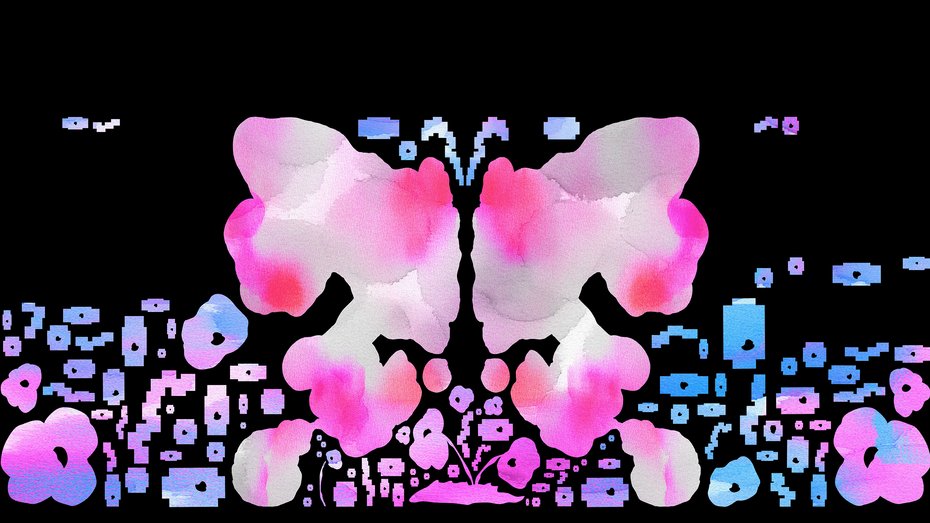
The exhibition accompanying the programme “Being Alone – Artistic Perspectives from Central and East Asia and Beyond” brings together artistic works that view loneliness not merely as an individual state, but as a multifaceted social, digital, and political phenomenon. Between personal experience and global interconnections, a space unfolds in which being alone becomes visible as both a rupture and as an opportunity.
Shahrizoda Ergasheva (Studio HAU2) understands loneliness as a shared feeling that crystallizes in the unremarkable moments of everyday life and that connects individual experiences with each other.
Danil Usmanov (Studio HAU2) shifts the focus to a social reality in which geographic isolation and family separation due to labor migration shape children’s upbringing.
Natalie Lo Lai Lai (Studio HAU2) understands solitude as a quiet, resistant process that unfolds in cycles of work, care, and transformation.
Isaac Chong Wai (Foyer HAU2) examines the representation of emotions and reveals the tension between authentic expression and the social staging of grief.
Thematically, Hao Jingban (Studio HAU2) builds on this idea, reflecting on the limits of understanding between different lived realities, where personal experience and social events enter into a fragile relationship.
Kamila Narysheva (Studio HAU2) shifts the focus to the digital space, where communication is distorted by algorithmic interventions and closeness appears increasingly precarious.
aaajiao (Studio HAU2) expands on this perspective, demonstrating how algorithmic systems shape perception, empathy, and social relationships, and produce loneliness as a structural condition of a networked world.
Lina Machida (M40) shifts the focus from the structural layer back to her very personal perspective, opening up this space. She explores the loneliness that arises from the experience of stuttering and reaches its limits in the struggle to communicate between the personal inner world and outer expression.
Additionally, 11 short films from the international AI competition “AIsolation” (Foyer HAU2) will be presented. The works creatively explore the opportunities, risks, and ethical questions of AI, as well as human–machine collaboration and the limits of visual language.
Team
Dates
Past
29.5., 17:00–23:00, 30.5., 16:00–23:00, 31.5., 14:00–23:00
Limited capacity, waiting times may occur
31.5., 14:30: Guided Tour through the Exhibition with the Artists
Credits
A project within “Solitude: Loneliness & Freedom,” an initiative of the Goethe-Institutes in East and Central Asia in cooperation with HAU Hebbel am Ufer.
Location
HAU2
Hallesches Ufer 34, 10963 BerlinThere are two marked parking spots in front of the building. Barrier-free restroom facilities are available. Four relaxed seats are available in the first row of HAU2.
M40 (Hallesches Ufer 40)
Hallesches Ufer 40, 10963 Berlin